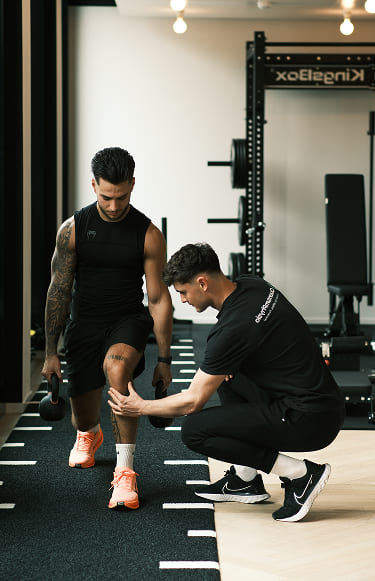
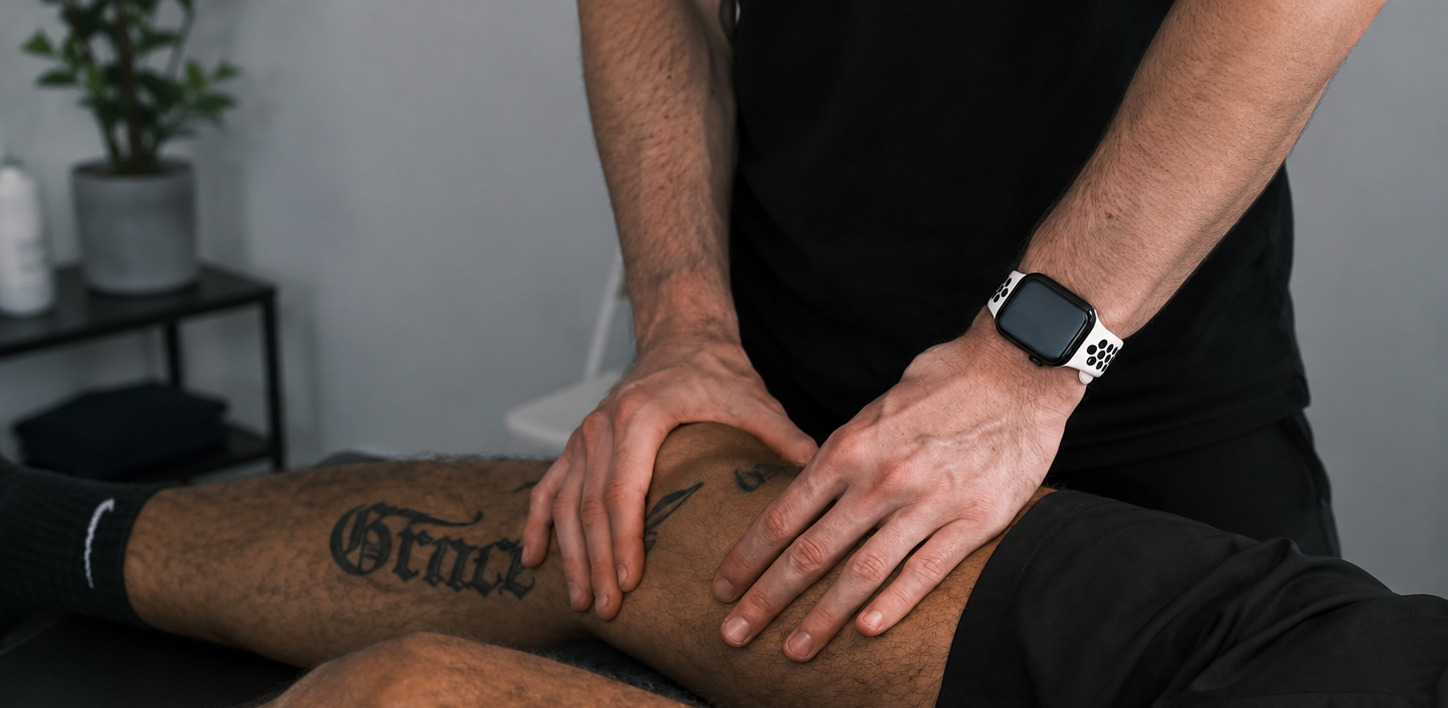
Knee pain after sport is a common problem — especially after running, football, strength training, tennis, hiking, or returning to exercise after a longer break. Sometimes the pain appears directly during activity. In other cases, the knee only starts to hurt a few hours later or the next morning. A slight pulling sensation after unusual physical activity is not always a reason to worry. However, if knee pain after sport appears regularly, becomes stronger, or limits movement, it makes sense to identify the cause. The knee is a complex joint that has to absorb high forces during sport. Muscles, tendons, ligaments, cartilage, menisci, and movement patterns all work together.
In Zurich, physiotherapy offers a targeted way to treat knee pain after sport — not only by reducing symptoms in the short term, but by understanding the underlying cause. The goal is to improve knee load capacity, optimise movement patterns, and support a safe return to sport, training, and everyday activities.
Knee pain after sport often develops due to overload, muscular imbalances, poor technique, increasing training too quickly, or previous injuries. Physiotherapy helps identify the cause, reduce pain, and prepare the knee for safe loading again.
Knee Pain After Sport: What Could Be Behind It?
During sport, the knee often has to absorb several times your body weight. Running, jumping, changing direction, walking downhill, or performing heavy squats place high forces on the joint. If the load is higher than the body’s current capacity, pain can develop.
Often, the problem is not only located directly in the knee. The hip, foot, ankle, core stability, and training structure also influence how much stress is placed on the knee. That is why a detailed assessment is important. Just because the pain is felt in the knee does not automatically mean that the cause is only in the knee.
Typical causes of knee pain after sport include:
- increasing training volume or intensity too quickly
- not enough recovery between training sessions
- weak hip, glute, or thigh muscles
- limited mobility in the hip, foot, or ankle
- poor leg alignment during squats, landings, or changes of direction
- poor running technique or unsuitable footwear
- previous injuries that were not fully rehabilitated
- overload of tendons, cartilage, or menisci
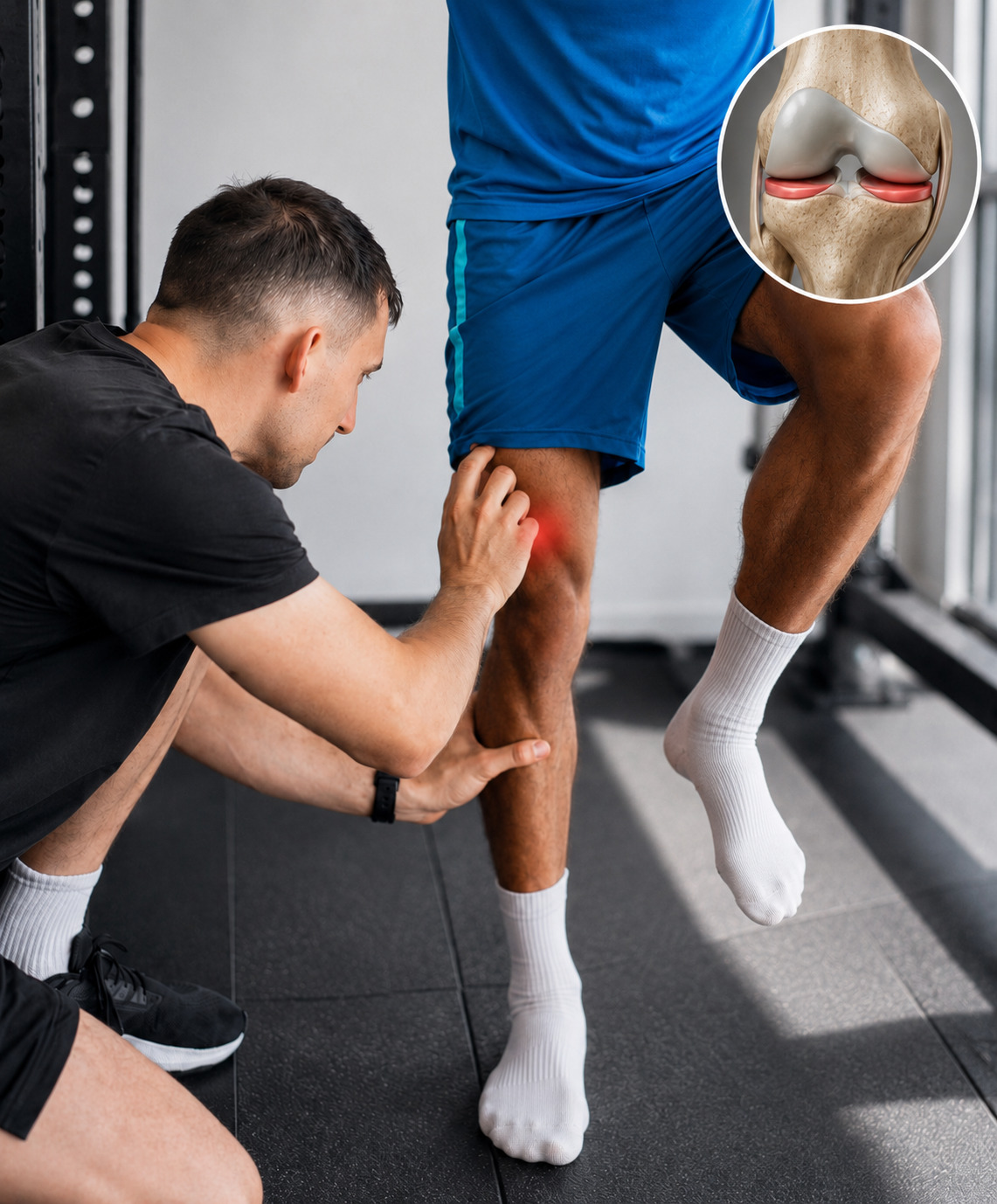
For physically active people, it is important not only to treat the pain, but also to assess training load, technique, and physical capacity. In physiotherapy in Zurich Altstetten, we therefore assess not only the knee itself, but also the hip, foot, leg alignment, strength, mobility, and training load.
Common Causes of Knee Pain After Sport
Knee pain can have many different causes. The exact diagnosis should always be assessed individually, as similar symptoms can come from different sources.
Overload From Training Too Intensively
One of the most common causes is increasing training too quickly. People who suddenly run more, train more often, lift heavier weights, or return to full intensity after a break can overload tendons, joints, and muscles. Typically, the pain first appears only after sport. Later, it may also occur during activity or even in everyday movements. That is why physiotherapy does not only treat the knee itself, but also analyses and gradually adapts the training load.
Patellofemoral Pain Syndrome
Pain at the front of the knee or around the kneecap can indicate patellofemoral pain syndrome. Symptoms often appear when walking stairs, squatting, running, jumping, or sitting for longer periods. Leg alignment, hip control, thigh strength, and movement patterns can all play an important role. Physiotherapy can help reduce stress on the kneecap and improve knee control through targeted exercises.
Runner’s Knee / Iliotibial Band Syndrome
With runner’s knee, pain often appears on the outside of the knee. Runners frequently notice symptoms after a certain distance or when running downhill. Possible contributing factors include training volume, running technique, hip stability, leg alignment, and muscular tension. Treatment usually combines load management, targeted exercises, and analysis of running or movement mechanics.
Patellar Tendon Problems
Pain below the kneecap can indicate irritation or overload of the patellar tendon. These problems are common in sports involving jumping, sprinting, sudden stops, or squats. A structured load progression is especially important here. Complete rest often only helps in the short term. The key is to gradually expose the tendon to load again — with suitable exercises, correct dosage, and progressive development.
Meniscus Irritation or Meniscus Injury
Pain on the inner or outer joint line can be related to the meniscus. Symptoms often appear during twisting movements, deep squats, changes of direction, or loading under rotation. Not every meniscus change automatically requires surgery. Symptoms, function, load capacity, and everyday limitations are decisive. Physiotherapy can help improve mobility, strength, and stability, making the knee safer to load in everyday life and sport.
Cartilage Irritation or Early Degeneration
If the knee swells after activity, feels stiff, or hurts during impact and compressive loading, the joint cartilage may also be involved. Irritation can occur especially with repeated overload, previous injuries, or poor loading mechanics. In this case, well-dosed training is particularly important. The goal is not to completely protect the knee, but to manage load in a way that allows the joint to adapt without being constantly irritated.
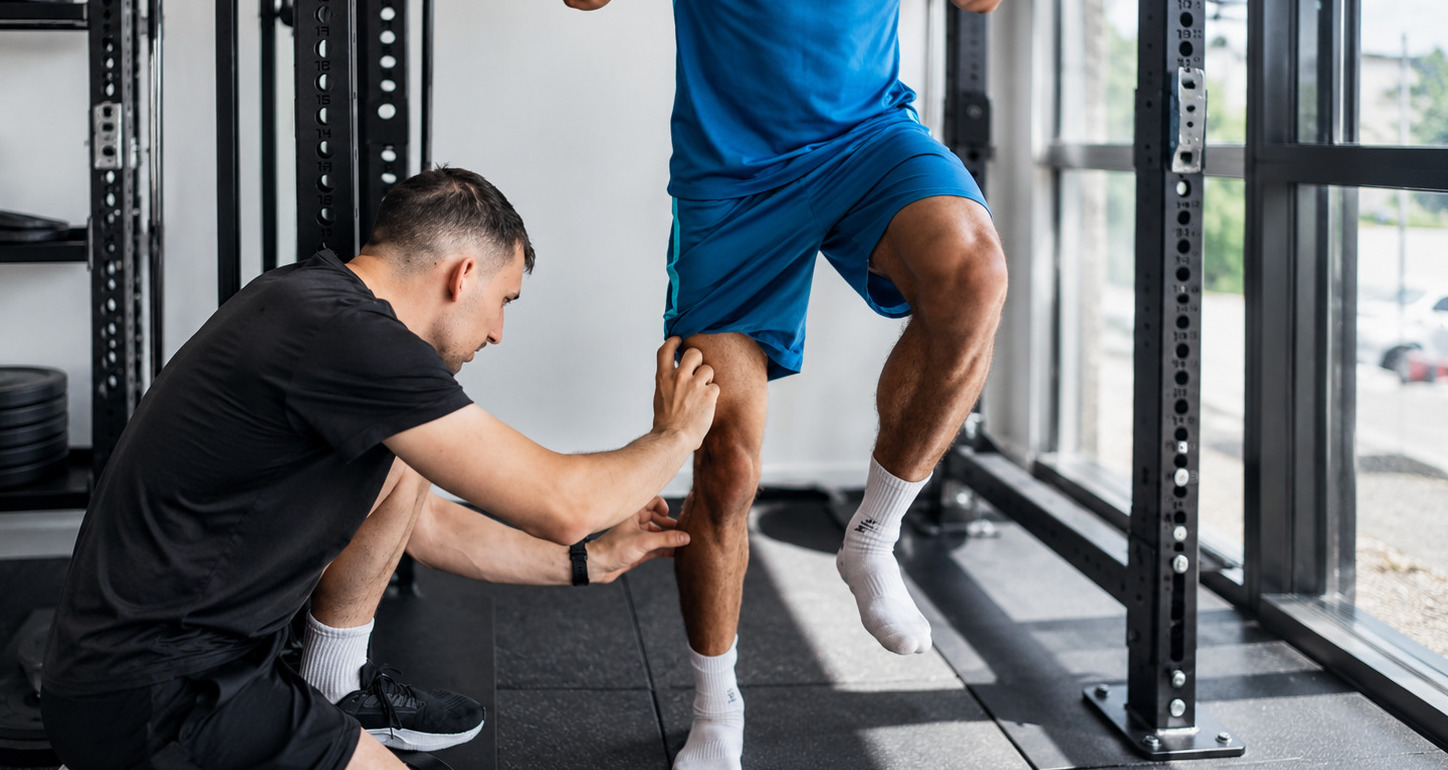
Knee Pain After Running, Football, Strength Training, or Hiking
Knee pain after sport often appears in different situations depending on the type of sport. That is why treatment should not only focus generally on the knee, but also on the specific sporting load.
Knee Pain After Running
When running, knee pain often develops due to increasing distance too quickly, not enough recovery, unsuitable shoes, running technique, or poor hip and core stability. Typical symptoms include pain at the front of the knee, on the outside of the knee, or below the kneecap. In physiotherapy, we therefore do not only examine the knee. We also analyse running load, leg alignment, hip control, and strength so that running can be reintroduced gradually and safely.
Knee Pain After Football
Football places high stress on the knee through sprints, stops, rotations, duels, and quick changes of direction. Pain can develop due to overload, instability, muscular deficits, or previous injuries. For football players, it is especially important to rebuild strength, reactivity, leg alignment control, and sport-specific movements. This is the only way to return to the pitch safely.
Knee Pain After Strength Training
During strength training, knee pain often appears during squats, lunges, leg press, or jumping exercises. Possible causes include poor technique, excessive load, limited mobility, or insufficient control of leg alignment. Physiotherapy can help improve exercise technique, dose load correctly, and strengthen muscles in a targeted way. The goal is not to avoid strength training permanently, but to make it possible again in a safe, controlled, and knee-friendly way.
Knee Pain After Hiking or Walking Downhill
During hiking, especially when walking downhill, the knee is heavily stressed by braking forces. Pain at the front of the knee, around the kneecap, or inside the joint can develop due to weak thigh muscles, poor control, or irritated joint structures. Targeted training of the thighs, hips, calves, and core can help stabilise the knee better when walking downhill and distribute load more evenly.
When Should Knee Pain After Sport Be Assessed?
Not every knee pain is dangerous. However, there are situations where an assessment makes sense. The earlier the cause is identified, the easier it is to prevent mild symptoms from becoming chronic.
A physiotherapy or medical assessment is recommended if:
- the pain appears after every training session
- the knee becomes swollen or warm
- pain occurs when walking stairs, running, or squatting
- the knee feels unstable or gives way
- there are locking, clicking, or catching sensations
- symptoms last longer than one to two weeks
- sport is no longer possible without limitations
- there is a history of previous knee injuries
In cases of severe pain after injury, significant swelling, instability, or the feeling that the knee can no longer be loaded normally, medical assessment is also recommended.
How Physiotherapy Helps With Knee Pain After Sport
Physiotherapy for knee pain is not only about reducing pain. The key is to understand why the symptoms developed and how the knee can become more load-tolerant again.
Modern physiotherapy treatment usually includes:
- detailed analysis of symptoms and load
- assessment of mobility, strength, and stability
- evaluation of leg alignment, knee control, and movement patterns
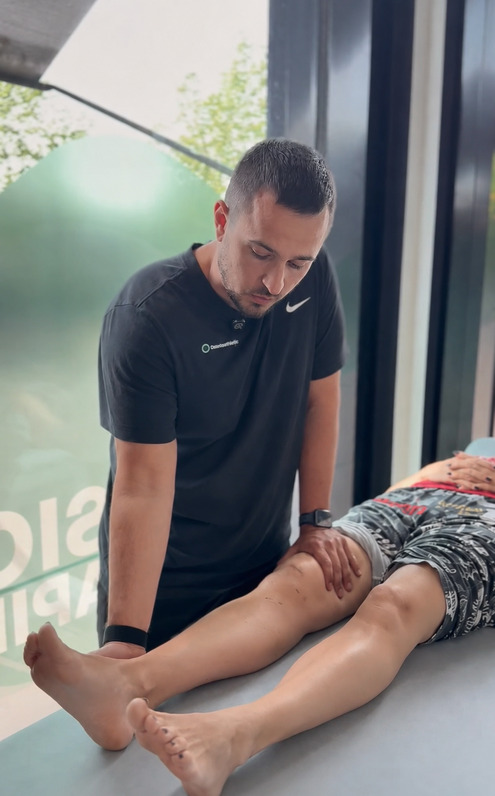
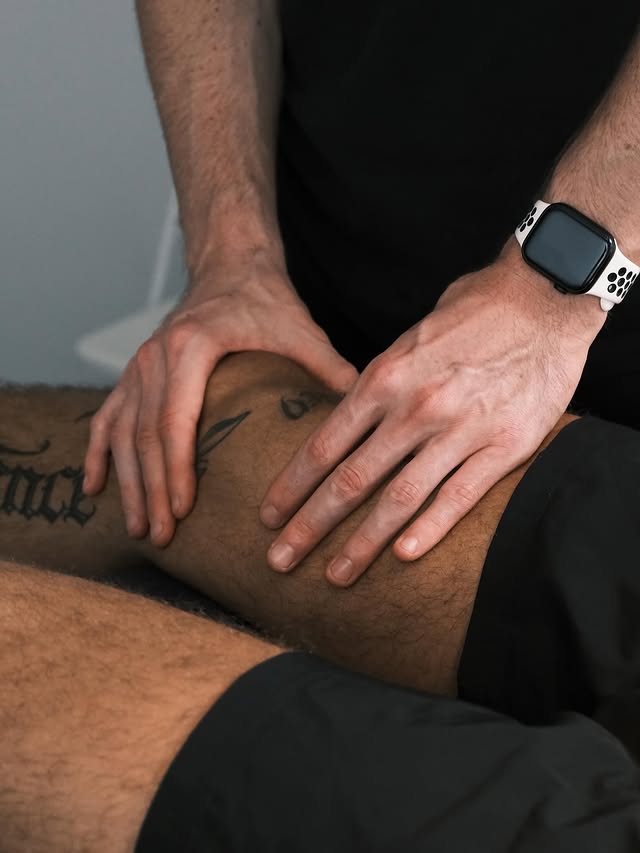
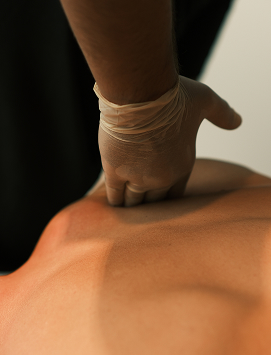
- targeted manual therapy for movement restrictions
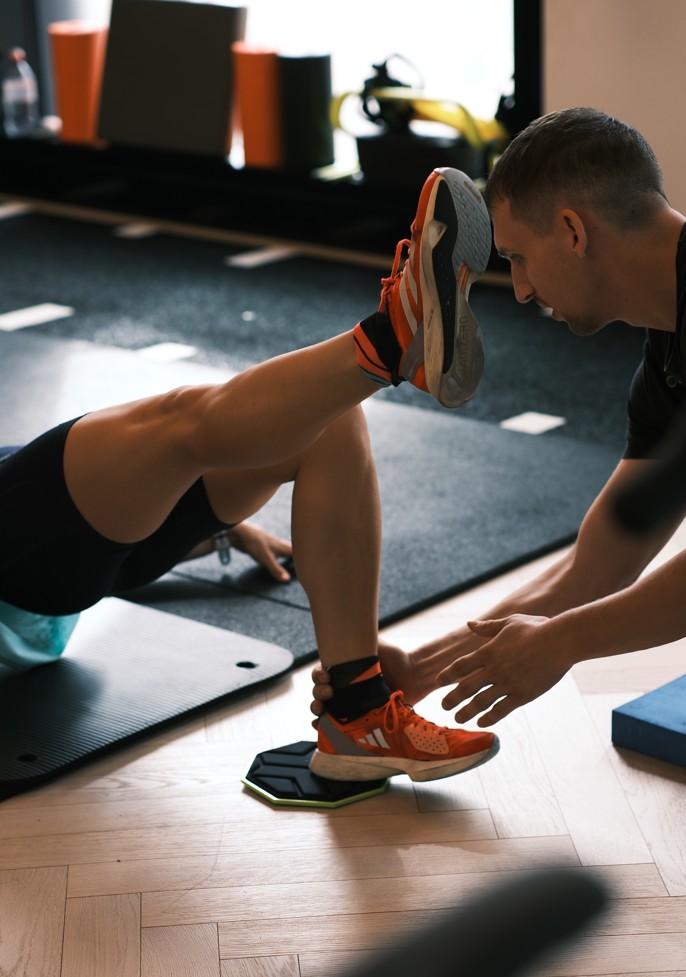
- active exercises for strength, coordination, and control
- adjustment of training, running volume, or sport-specific load
- gradual return to sport and full loading
The goal is not only for the knee to hurt less in the short term, but for it to function reliably again in the long term.
Physiotherapy for Knee Pain in Zurich at Quantum Physio
If you are looking for physiotherapy for knee pain after sport in Zurich, Quantum Physio in Zurich Altstetten offers a modern, active, and structured approach. Symptoms are not viewed in isolation, but in connection with your sport, training load, movement patterns, and personal goals.
The central question is: why is the knee being overloaded during sport — and what does the body need so that this load becomes safe again?
Treatment combines passive therapeutic methods, active rehabilitation, and sport-specific load progression in a meaningful way. For physically active people, this transition is especially important: pain reduction alone is not enough. The knee must regain strength, stability, control, and confidence.
Possible Treatment Options at Quantum Physio
Depending on the cause and type of symptoms, different methods can be used:
- physiotherapy
- sports physiotherapy
- manual therapy
- medical training therapy
- strength and stability training
- movement analysis
- sport-specific rehabilitation
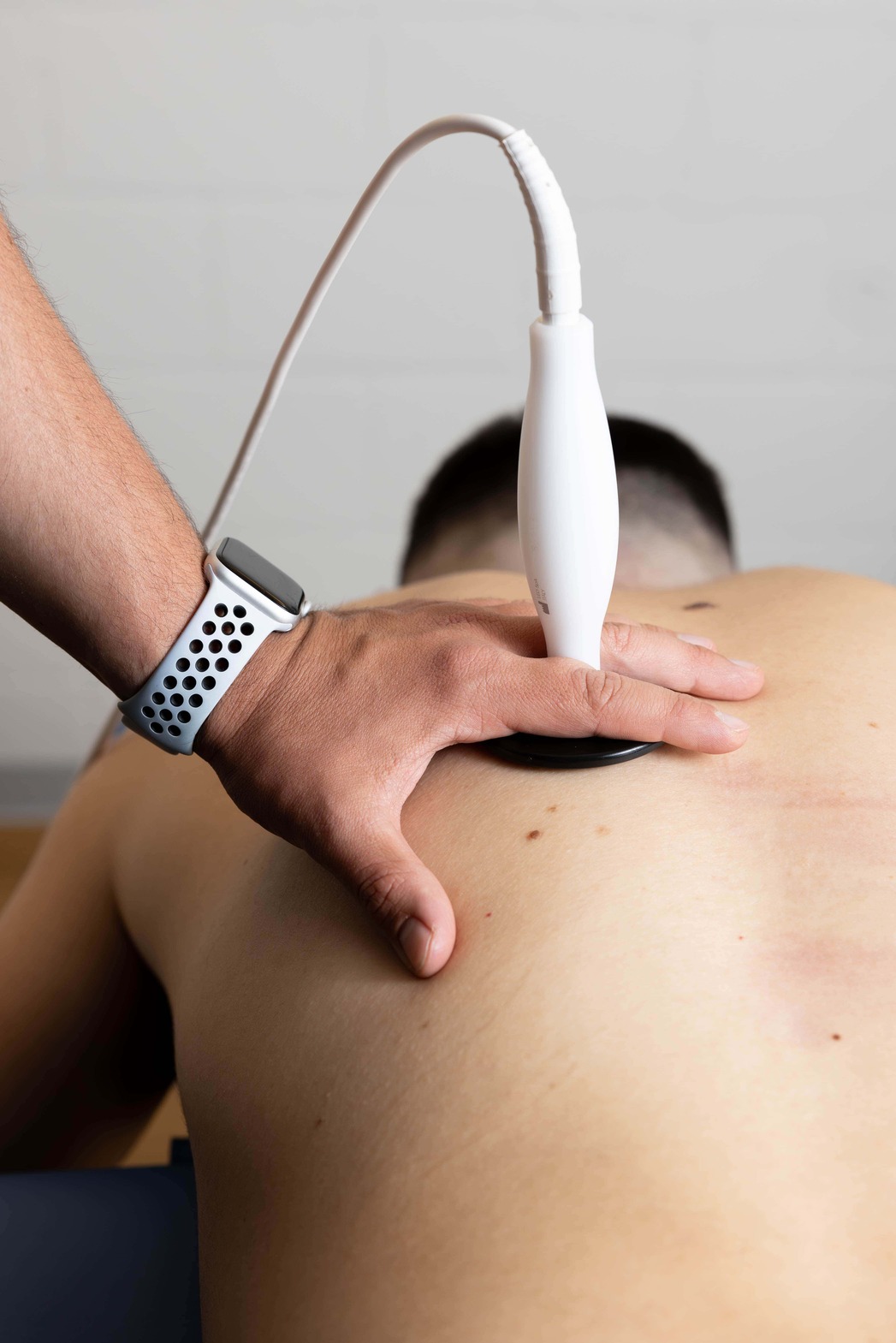
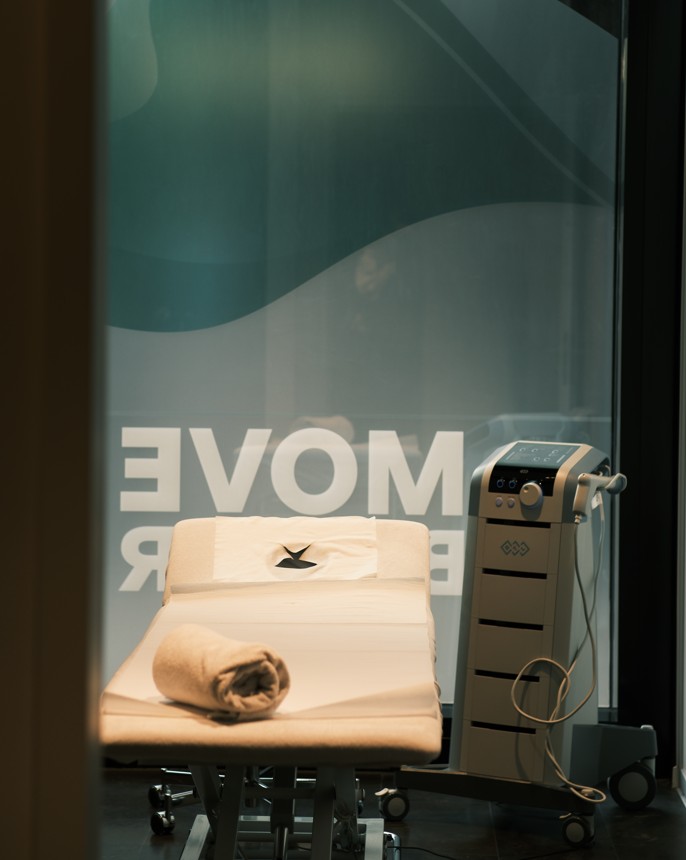
- TECAR therapy
- electrotherapy
- shockwave therapy
- functional training
- return-to-sport programme
The exact treatment plan is created individually. A runner with pain on the outside of the knee often needs a different approach than a football player with pain after changes of direction or a person with knee pain after strength training.
Treatment Process for Knee Pain After Sport
Successful treatment follows a clear process. This prevents only the symptoms from being treated while the actual cause remains unresolved.
1. Detailed Assessment
At the beginning, we discuss your symptoms, training load, sport, pain development, and previous injuries. This is followed by a physical assessment of mobility, strength, stability, and movement patterns. The goal is to identify the most likely causes of your knee pain as precisely as possible.
2. Individual Treatment Plan
Based on the assessment, we create a personal treatment plan. This may include manual techniques, targeted exercises, training adjustments, and recommendations for everyday life or sport. The plan is always adapted to your current condition and personal goal.
3. Active Development of Strength and Stability
Active training is a key part of rehabilitation. Often, the hip, glutes, thighs, calves, core, and leg alignment control are strengthened in a targeted way. This helps the knee control load better and absorb forces more safely.
4. Return to Sport and Load
Once pain, mobility, and strength improve, load is gradually increased. Depending on the sport, running progression, jumping, changes of direction, strength training, or sport-specific exercises may be included. The goal is not only pain-free rest, but a safe return to sport.
What You Can Do Yourself for Knee Pain After Sport
For mild symptoms, temporarily reducing load can help — without becoming completely inactive. It is important not to continue overloading the knee, but also not to protect it for too long without an active approach.
Useful first steps include:
- reduce training volume for a few days
- temporarily avoid movements that trigger pain
- try alternative forms of loading, such as cycling or light strength training
- make sure you recover properly
- avoid sudden increases in intensity
- include strength training for the hip, thighs, and core
If the pain keeps returning, simply reducing symptoms is not enough. In that case, a targeted assessment is useful to find the cause and guide training correctly.
Common Mistakes With Knee Pain After Sport
Many people wait too long or try to simply ignore the pain. This can cause symptoms to become more established or reduce load capacity even further.
Common mistakes include:
- continuing to train despite increasing pain
- relying only on painkillers or ointments
- too much complete rest without targeted rehabilitation
- returning to full load too early
- lack of strength training
- no analysis of technique, leg alignment, or training load
- incomplete rehabilitation of previous injuries
A better approach is to take the pain seriously, adjust the load intelligently, and gradually rebuild the body.
Cost of Physiotherapy for Knee Pain in Zurich
Many patients want to know whether physiotherapy for knee pain is covered by health insurance. In Switzerland, this mainly depends on whether you have a medical prescription.
If physiotherapy is medically necessary and prescribed by a doctor, mandatory basic insurance usually covers a large part of the treatment costs. Patients pay the deductible and co-payment according to their insurance model. This is especially useful when symptoms are stronger, have lasted longer, or a medical diagnosis is present.
Physiotherapy is also possible without a medical prescription. In this case, patients usually pay the costs themselves, although supplementary insurance may cover part of the costs depending on the contract. This can be useful if you want to start treatment early, work preventively, or specifically improve your sports-related load capacity.
Services such as medical training therapy, personal training, sport-specific rehabilitation, or performance programmes may be billed separately depending on the situation. These programmes are especially useful when the goal is long-term load capacity, prevention, or returning to sport.
Frequently Asked Questions About Knee Pain After Sport
Is knee pain after sport normal?
Mild symptoms after unusual activity can happen. However, if knee pain appears regularly, becomes stronger, or limits movement, it makes sense to identify the cause.
When should I go to physiotherapy for knee pain?
If pain keeps returning after sport, lasts for several days, affects stairs or running, or the knee feels unstable, physiotherapy is recommended.
Can I continue training with knee pain?
It depends on the cause and intensity of the pain. Sometimes adjusting the load is enough. If the pain increases or keeps returning, training should be adapted in a targeted way.
Which sports commonly cause knee pain?
Knee pain commonly occurs with running, football, tennis, skiing, strength training, basketball, hiking, and sports involving jumping or quick changes of direction.
Does physiotherapy help with runner’s knee?
Yes. Physiotherapy can help with runner’s knee by improving load management, running technique, hip stability, leg alignment, and muscular control.
What can I do for knee pain after running?
First, reduce running volume and intensity. If the pain keeps returning, running technique, leg alignment, hip strength, and training structure should be analysed.
What should I do for knee pain after strength training?
First, check technique, load, and range of motion. If pain regularly appears during squats, lunges, or leg press, physiotherapy can help improve movement and load control.
Do I have to completely rest with knee pain?
Not always. In many cases, adjusted loading is better than complete rest. It is important to identify which movements trigger pain and how irritated the knee is.
Does health insurance cover physiotherapy for knee pain?
With a medical prescription, basic insurance in Switzerland usually covers a large part of physiotherapy costs. Without a prescription, self-payment conditions or supplementary insurance rules apply.
Where can I find physiotherapy for knee pain in Zurich?
Quantum Physio in Zurich Altstetten offers modern physiotherapy, sports physiotherapy, and active rehabilitation for knee pain after sport.