A meniscus tear is a common injury of the knee joint. Typical symptoms include pain on the inside or outside of the knee, swelling, restricted mobility, and a sharp pain during twisting movements, squats, or when climbing stairs.
Not every meniscus tear requires surgery. Depending on the type of injury, the symptoms, and the patient’s personal activity goals, targeted meniscus tear physiotherapy in Zurich can help reduce pain, restore mobility, and gradually improve the knee’s ability to tolerate load.
What is a meniscus tear?
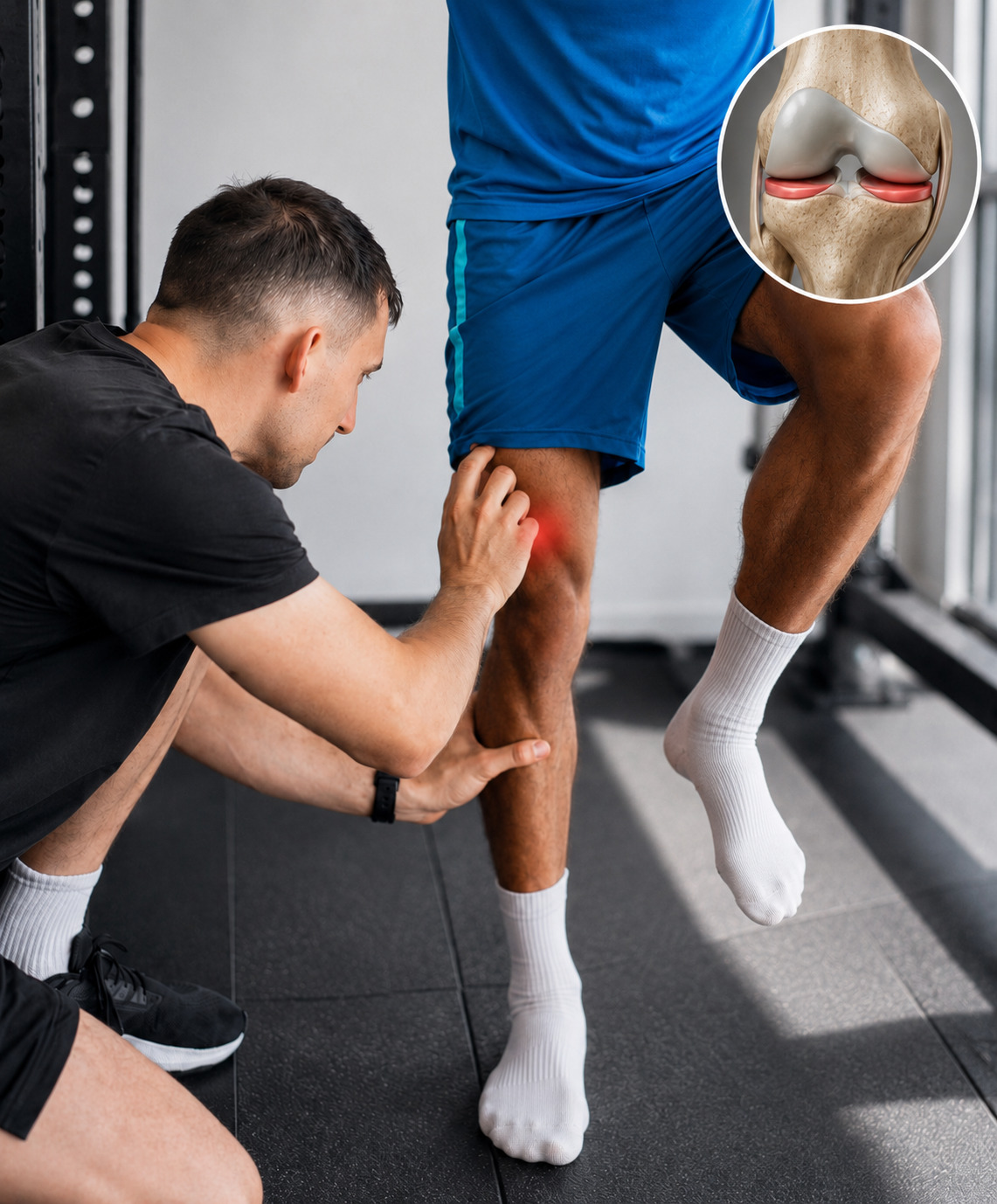
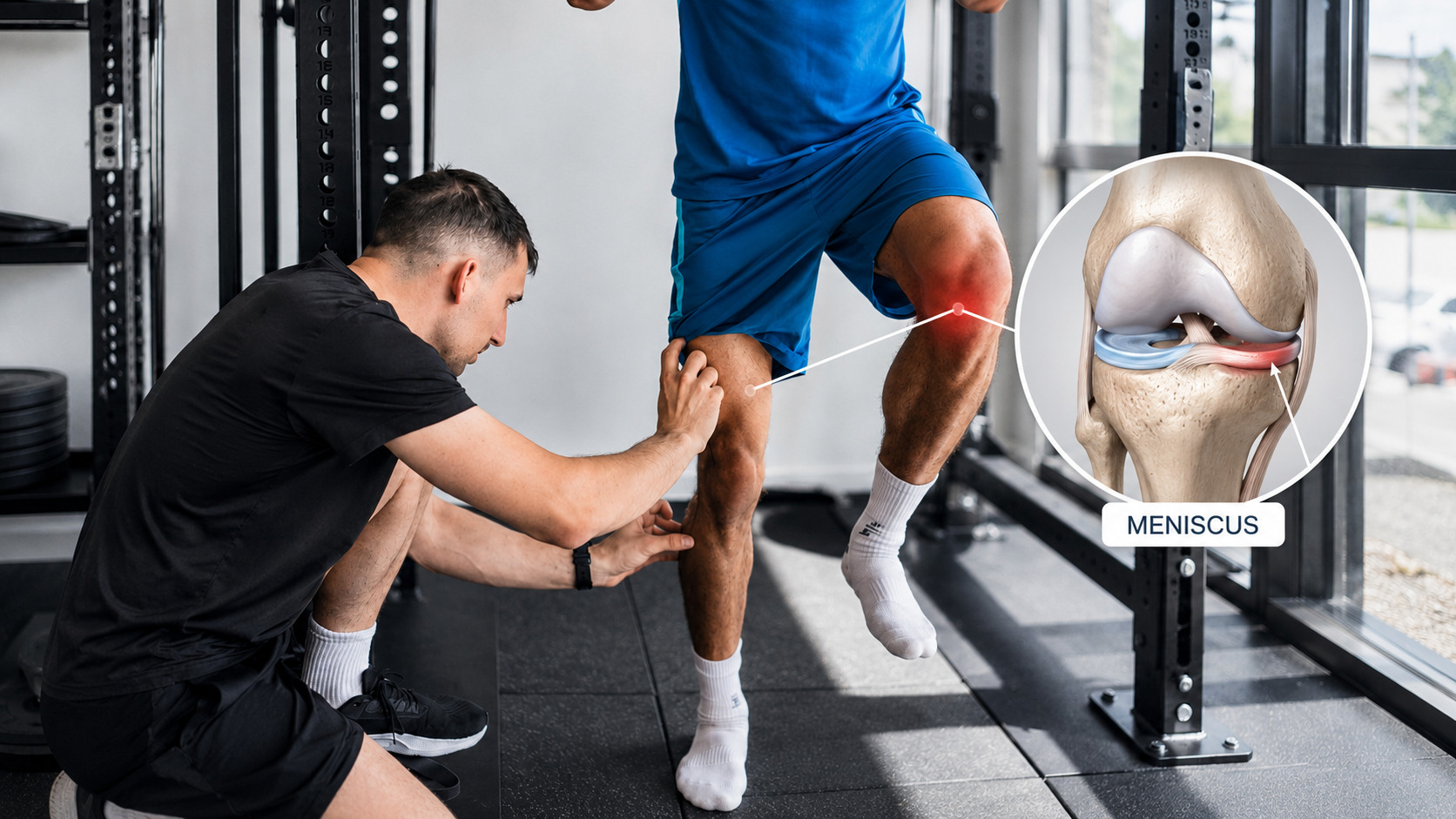
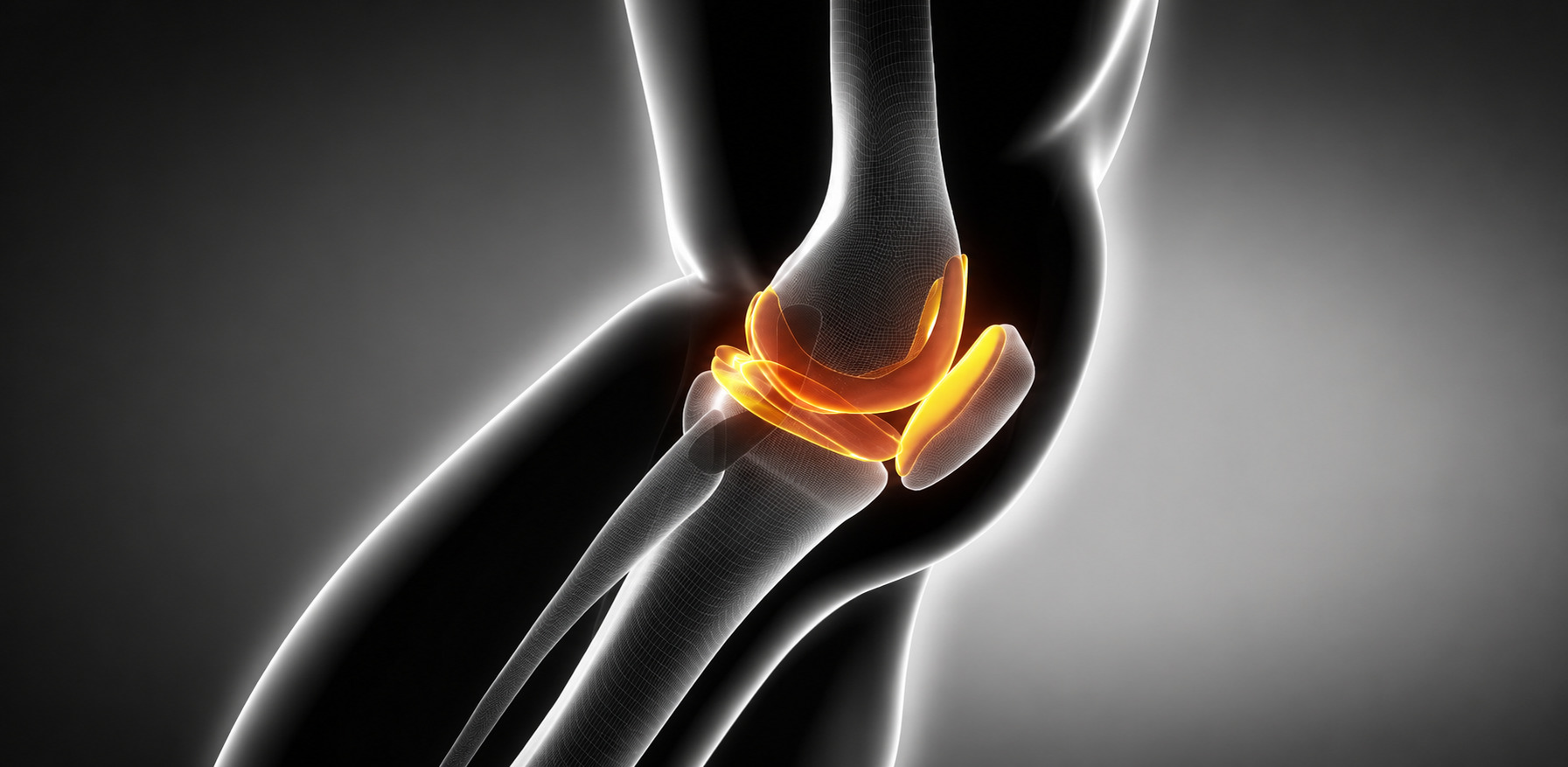
The menisci are two crescent-shaped fibrocartilage structures in the knee joint. They are known as the medial meniscus and the lateral meniscus. Both are located between the thigh bone and the shin bone and help distribute load evenly across the knee.
The menisci perform several important functions:
- distributing and absorbing load
- supporting the mechanical stability of the knee
- improving joint guidance
- protecting the articular cartilage
- supporting awareness of joint position and movement
A meniscus tear occurs when the meniscal tissue is damaged. The tear may be small and stable or may involve a larger, mobile part of the meniscus. Not every tear visible on an MRI automatically causes symptoms. The combination of symptoms, clinical examination, load tolerance, and imaging is therefore always important.
How does a meniscus tear occur?
A meniscus tear can occur suddenly during a sports injury or develop gradually due to age-related and load-related changes.
Acute meniscus tear
An acute meniscus tear often occurs when the loaded knee is bent and twisted at the same time. This can happen, for example, during a rapid change of direction, an uncontrolled landing, or a fall while skiing.
Typical injury mechanisms
- a rapid twisting movement on the weight-bearing leg
- a sudden change of direction
- deep bending or twisting of the knee
- an uncontrolled landing after a jump
- a fall or twisting injury while skiing
- direct contact during football, handball, or basketball
- a simultaneous anterior cruciate ligament injury
Degenerative meniscus tear
A degenerative meniscus tear usually develops gradually. Over time, the meniscal tissue loses some of its elasticity and ability to tolerate load. As a result, even everyday movements such as deep squatting, standing up, kneeling, or a slight twisting motion can trigger symptoms.
However, degenerative changes visible on an MRI do not automatically mean that surgery is necessary. Treatment is mainly guided by whether pain, swelling, restricted movement, or functional limitations are present.
Typical symptoms of a meniscus tear
Symptoms can vary depending on the location, size, and stability of the tear. Additional injuries to the cartilage, ligaments, or bone can also affect the symptoms.
Common symptoms
- pain on the inside or outside of the knee joint
- pain during twisting movements
- discomfort during deep bending or squatting
- pain when climbing stairs
- swelling or irritation of the knee joint
- limited knee flexion or extension
- sharp pain when bearing weight
- clicking or catching in the knee
- instability during sport or rapid movements
- temporary or complete locking of the knee joint
A popping or clicking sound alone does not confirm a meniscus tear. Joint noises can also occur in a healthy knee. Pain, recurrent swelling, true locking, and a persistent reduction in load tolerance are more clinically relevant.
What types of meniscus tears are there?
Meniscus tears are classified according to their shape, location, and cause. This classification is important because it can influence both the choice of treatment and the course of rehabilitation.
- Longitudinal tear: The tear runs lengthwise along the meniscus.
- Bucket-handle tear: A larger section of the meniscus can become displaced and lock the knee.
- Radial tear: The tear runs from the inner edge towards the outside.
- Horizontal tear: The meniscal tissue is split into an upper and a lower layer.
- Flap tear: A small flap of tissue can cause mechanical symptoms.
- Complex tear: Several tear patterns occur at the same time.
- Meniscus root tear: The attachment of the meniscus to the bone is affected.
Blood supply also plays an important role. The outer part of the meniscus has a better blood supply than the inner portion. As a result, the healing potential can vary depending on the location of the tear.
How is a meniscus tear diagnosed?
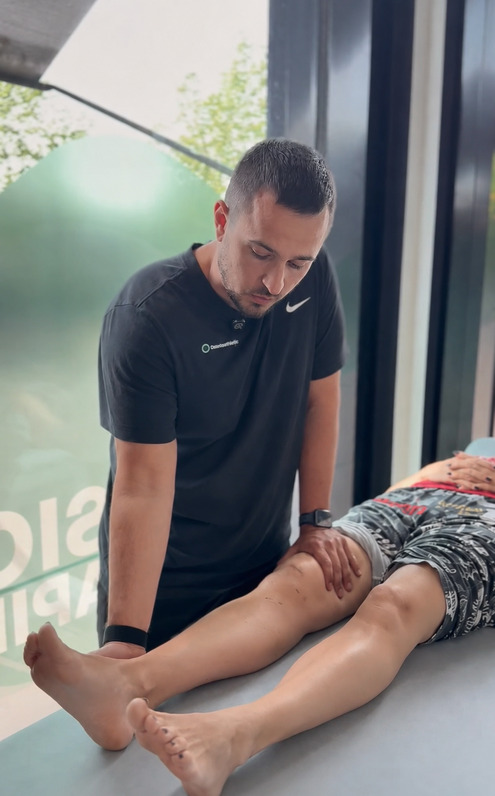
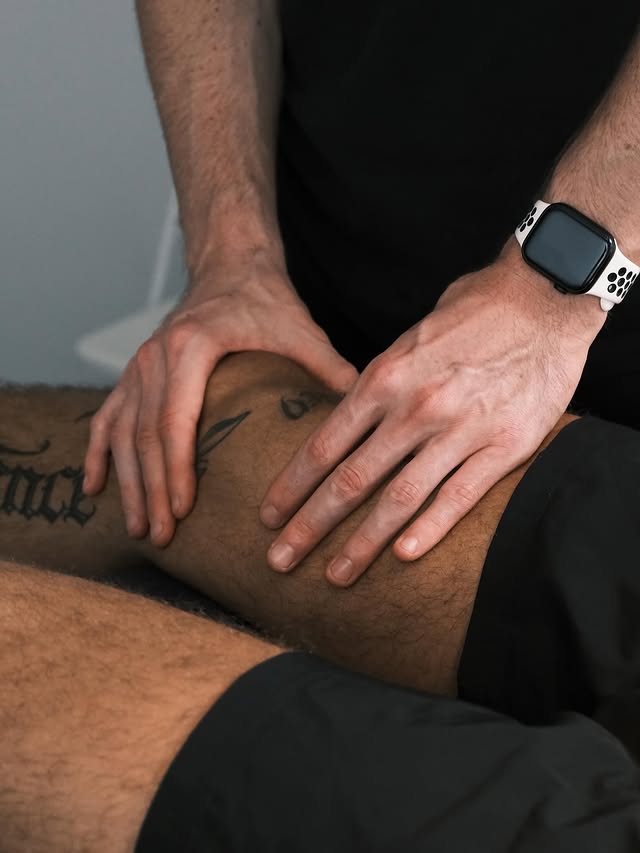
Diagnosis begins with a detailed discussion about how the injury occurred, how the symptoms developed, and which limitations are currently present. This is followed by an assessment of the knee joint’s range of motion, swelling, strength, walking pattern, and load tolerance.
Typical parts of the examination
- palpation of the medial and lateral joint line
- assessment of knee extension and flexion
- evaluation of swelling and joint irritation
- meniscus-specific provocation tests
- assessment of the cruciate and collateral ligaments
- evaluation of walking pattern, squatting, and single-leg control
- comparison with the unaffected knee
If necessary, magnetic resonance imaging, or MRI, is performed. This allows the menisci, cruciate ligaments, collateral ligaments, cartilage, and other structures to be assessed.
However, MRI findings should always be interpreted together with the symptoms and the clinical examination. Degenerative meniscal changes in particular can also be present in people who do not have knee pain.
Does a meniscus tear require surgery?
No. Not every meniscus tear requires surgery. Many symptoms can initially be treated conservatively through load modification, targeted physiotherapy, and a gradual training programme. For degenerative meniscus tears, an international guideline published in the BMJ even advises against routine knee arthroscopy.
The decision depends on several factors, including:
- the type, location, and size of the tear
- whether the tear is acute or degenerative
- the stability of the meniscal tissue
- pain and recurrent swelling
- mechanical locking of the knee
- additional ligament or cartilage injuries
- age and general health
- occupational and sporting demands
- response to conservative treatment
Conservative treatment without surgery
Conservative treatment may be appropriate if there is no persistent mechanical locking, the knee is sufficiently stable, and the symptoms can be improved through structured rehabilitation.
Treatment typically includes:
- temporary modification of painful activities
- reduction of swelling and joint irritation
- restoration of knee extension and flexion
- activation of the thigh muscles
- targeted strength training
- improvement of hip, knee, and foot control
- balance and coordination training
- a gradual return to work and sport
Especially in cases of degenerative meniscus-related symptoms, active exercise-based treatment is often the most appropriate first step. The training programme should be individually dosed and adapted according to how the knee responds.
Surgical treatment
Surgery may be considered for certain acute tears, true mechanical locking, unstable meniscal fragments, meniscus root injuries, or persistent symptoms despite appropriate conservative treatment.
Two common procedures are:
- Meniscus repair: The torn meniscus is repaired and preserved whenever possible.
- Partial meniscectomy: Only the irreparable and unstable portion is removed and smoothed.
Whenever medically possible, preserving the meniscus is the preferred approach. The most suitable treatment should be decided together with an orthopaedic specialist.
Important to know: If the knee can no longer be fully straightened after an injury, becomes significantly swollen, or is mechanically locked, it should be assessed by a doctor promptly.
Meniscus Tear Physiotherapy Zurich
Individual physiotherapy for a meniscus tear in Zurich can be beneficial during conservative treatment as well as before and after surgery.
At Quantum Physio, treatment is tailored to the type of injury, the current level of irritation, and the patient’s personal activity goals. Not everyone requires the same exercises or the same rehabilitation timeline.
Physiotherapy can be particularly helpful for:
- pain on the inside or outside of the knee
- swelling after physical activity
- restricted knee mobility
- weakness of the thigh muscles
- difficulty walking or climbing stairs
- pain during squats or deep knee bending
- instability during single-leg loading
- returning to running
- preparing for sport and competition
The goal is not only to reduce pain in the short term. The knee should regain sufficient strength, mobility, and control to meet the actual demands of everyday life, work, or sport.
How does rehabilitation after a meniscus tear work?
Rehabilitation progresses step by step. The individual phases depend on the symptoms, the type of meniscus tear, and whether surgery has been performed. After a meniscus repair, different loading restrictions often apply than after a partial meniscectomy or during conservative treatment.
Step 1 – Reduce pain and swelling
Initially, the main priorities are calming the knee joint, restoring full knee extension, and achieving a safe walking pattern. The load is adjusted so that the knee does not continue to react more strongly over time.
Step 2 – Restore mobility
Knee flexion and extension are gradually improved. After surgery, the individual instructions provided by the treating surgeon must be taken into account.
Step 3 – Build foundational strength
Load tolerance is developed through adapted squats, step-ups, exercises for the thigh and hip muscles, and training on a stationary bike.
Step 4 – Improve single-leg control
Single-leg strength exercises, balance training, and controlled movements improve stability and lower-limb alignment.
Step 5 – Return to running
Running should only begin once mobility, strength, control, and the knee’s response to load are sufficient. The return is gradual and adapted to the patient’s sporting goals.
Step 6 – Return to sport
Jumping, landing, acceleration, deceleration, and changes of direction are progressively trained and functionally tested according to the demands of the chosen sport.
Important to know: Progression to the next phase of rehabilitation should not be based solely on the number of weeks that have passed. Swelling, mobility, strength, movement control, and the knee’s response to load must also be taken into account.
Rehabilitation after meniscus surgery
The rehabilitation process after surgery depends greatly on the procedure that was performed.
After a partial meniscectomy
After a partial meniscectomy, load can often be increased relatively quickly. However, swelling, mobility, muscle strength, and walking pattern still need to be rebuilt systematically.
A return to everyday activities is usually possible earlier than a return to sports involving jumping, rapid twisting movements, or contact with opponents.
After a meniscus repair
After a meniscus repair, the repaired tissue requires more time to heal. Depending on the type and location of the tear, weight-bearing and knee flexion may be temporarily restricted during the early phase.
Rehabilitation takes both biological healing time and functional criteria into account. Complex, radial, or root tears may require a longer protection and rebuilding phase than smaller, stable tears.
How long does rehabilitation after a meniscus tear take?
The duration is not the same for everyone. It depends on several factors, including:
- conservative or surgical treatment
- meniscus repair or partial meniscectomy
- the type and location of the tear
- an additional ACL or cartilage injury
- swelling and mobility
- muscle strength and movement control
- occupational demands
- the desired sport
- how the knee joint responds to training
After a partial meniscectomy, a return to many activities is often possible within a few weeks. After a meniscus repair, rehabilitation usually takes several months. Complex tears or meniscus root injuries may require a considerably longer rebuilding period.
These timeframes should only be used as a general guide. Individual clearance should always be based on healing, symptoms, and the results of functional testing.
When can I return to sport after a meniscus tear?
The return to sport depends on the treatment, the progress of rehabilitation, and the demands of the specific sport.
Cycling or controlled strength training is generally possible earlier than football, skiing, handball, tennis, or basketball. Sports involving rapid changes of direction place greater demands on strength, stability, and reactive ability.
Before returning to sport, the following should be assessed:
- full or nearly full mobility
- no significant swelling after exercise
- sufficient strength of the thigh and hip muscles
- a controlled single-leg squat
- safe jumping and landing technique
- controlled acceleration and deceleration
- sport-specific changes of direction
- confidence in the affected knee
As part of sports physiotherapy, these abilities can be developed and assessed in a targeted manner.
What should be avoided with a meniscus tear?
During the acute phase, movements that repeatedly trigger severe pain, swelling, or locking should be avoided or modified. These may include deep squats, loaded twisting movements, and intense jumping.
However, complete and prolonged rest is usually not the goal. Too little activity can lead to loss of strength, reduced load tolerance, and increasing uncertainty. Appropriate load management is essential.
Meniscus tear and ACL injury
A meniscus tear can occur together with an anterior cruciate ligament injury. In this case, rehabilitation is adapted to both structures and to the treatment that has been performed.
You can find more information in our article about ACL tears and ACL rehabilitation in Zurich.
Meniscus tear treatment at Quantum Physio in Zurich
At Quantum Physio Zurich, we support patients with acute and persistent knee symptoms, as well as before and after meniscus surgery.
Treatment may include:
- an individual physiotherapy assessment
- evaluation of mobility, strength, and load tolerance
- reduction of pain and swelling
- targeted strengthening of the leg muscles
- gait and movement analysis
- balance and coordination training
- a controlled return-to-running programme
- jumping and landing training
- sport-specific rehabilitation
- functional testing before returning to sport
Our goal is not only to achieve a pain-free knee in the short term. The affected leg should regain sufficient strength, movement quality, and load tolerance to safely meet the demands of everyday life, work, and sport.
Frequently asked questions about meniscus tears
How can I tell if I have a meniscus tear?
Typical signs include pain on the inside or outside of the knee, swelling, discomfort during twisting movements, and restricted mobility. Some people may also experience catching or locking of the knee. A reliable diagnosis requires a clinical examination and, if necessary, an MRI.
Can you still walk with a meniscus tear?
In many cases, walking is still possible. However, this does not mean that the knee can tolerate full load. Symptoms often become noticeable only when climbing stairs, bending deeply, twisting, or during sports activities.
Can a meniscus tear heal on its own?
The healing potential depends on the location, shape, and size of the tear. The outer part of the meniscus has a better blood supply and therefore generally has a greater potential to heal than the inner portion. Even without complete anatomical healing, symptoms can improve significantly with targeted conservative treatment.
Does every meniscus tear require surgery?
No. Many meniscus-related symptoms can initially be treated with physiotherapy and a structured exercise programme. Surgery is mainly considered for certain unstable tears, true mechanical locking, or persistent problems despite conservative treatment.
When does physiotherapy begin?
Physiotherapy can often begin at an early stage. After surgery, the timing and permitted level of weight-bearing depend on the procedure performed and the individual instructions provided by the doctor.
How long does physiotherapy take?
After conservative treatment or a partial meniscectomy, rehabilitation may take anywhere from a few weeks to several months, depending on the individual starting point. After a meniscus repair, several months of rehabilitation are often required.
When can I start jogging again?
The return to running depends on swelling, mobility, strength, single-leg control, and how the knee responds to load. A fixed date alone is not sufficient. Running should be reintroduced gradually and in a controlled manner.
Can I play football or go skiing again after a meniscus tear?
In many cases, returning to these sports is possible. However, strength, stability, coordination, jumping and landing control, and sport-specific skills must be systematically developed and assessed first.
Can physiotherapy help avoid meniscus surgery?
For many degenerative and certain stable meniscus tears, a structured physiotherapy programme can significantly improve symptoms and knee function. However, whether surgery is necessary always depends on the individual injury and how it progresses over time.
A meniscus tear does not automatically require surgery. The type of tear, the actual symptoms, knee function, and the patient’s personal activity goals are the key factors.
Successful rehabilitation involves more than general knee exercises. An individual assessment, targeted strength training, a controlled increase in load, and regular functional testing are essential.
If your knee is painful after an injury, repeatedly becomes swollen, feels unstable during twisting movements, or does not regain the expected level of function after meniscus surgery, a professional physiotherapy assessment at Quantum Physio in Zurich can be beneficial.