Shoulder pain is pain in and around the shoulder joint. Most people feel it as an ache on the outside of the upper arm that gets worse when they lift the arm, put on a jacket or lie on that side at night. After back and neck pain, it is one of the most common musculoskeletal complaints. Tradespeople who work overhead get it, and so do tennis players, swimmers and gym-goers who add weight too quickly.
Most of the time the rotator cuff tendons are overloaded, often labelled shoulder impingement. Less often, a frozen shoulder, calcific tendinitis, an unstable shoulder or arthritis is the cause. And sometimes the pain does not come from the shoulder at all, but from the neck.
Most shoulder pain can be treated without surgery. If it lasts longer than two to three weeks, wakes you at night or stops you lifting your arm properly, get it assessed. At our physiotherapy clinic in Zurich Altstetten, we work out whether a tendon, the bursa, the joint capsule or your neck is behind it, ease the pain and rebuild your shoulder’s strength and load tolerance.
In short: Shoulder pain usually comes from overloading the rotator cuff, for example with overhead work, in the gym or on the tennis court. In most cases, targeted and well-dosed strength training works best, often combined with manual therapy. Get medical help promptly after a fall with loss of strength, if your shoulder is red and hot with a fever, or if pain comes on suddenly with chest pressure.
Shoulder Pain: What Could Be Behind It?
Most shoulder pain develops when tendons, muscles and the bursa take on more load than they can currently handle. The rotator cuff is affected most often. It is a group of four muscles whose tendons wrap around the top of the upper arm bone like a cuff and keep it centred in the socket every time you move your arm.
The shoulder is the most mobile joint in the body. The price for that is very little bony support, so muscles do most of the work of holding it steady. When the rotator cuff, shoulder blade muscles and trunk don’t work well together, more load ends up on the tendons and bursa. A stiff upper back plays a part too, because the arm struggles to get overhead if the thoracic spine can’t extend.
Typical triggers include:
- a sudden jump in load, such as going straight back to your old bench press weights after a holiday
- repeated overhead work, for example painting, installing or cleaning windows
- overhead sports such as tennis, volleyball, handball, swimming or climbing
- weak rotator cuff and shoulder blade muscles
- a fall onto an outstretched arm or directly onto the shoulder
- a previous dislocation
- tendon changes that become more common from around 50
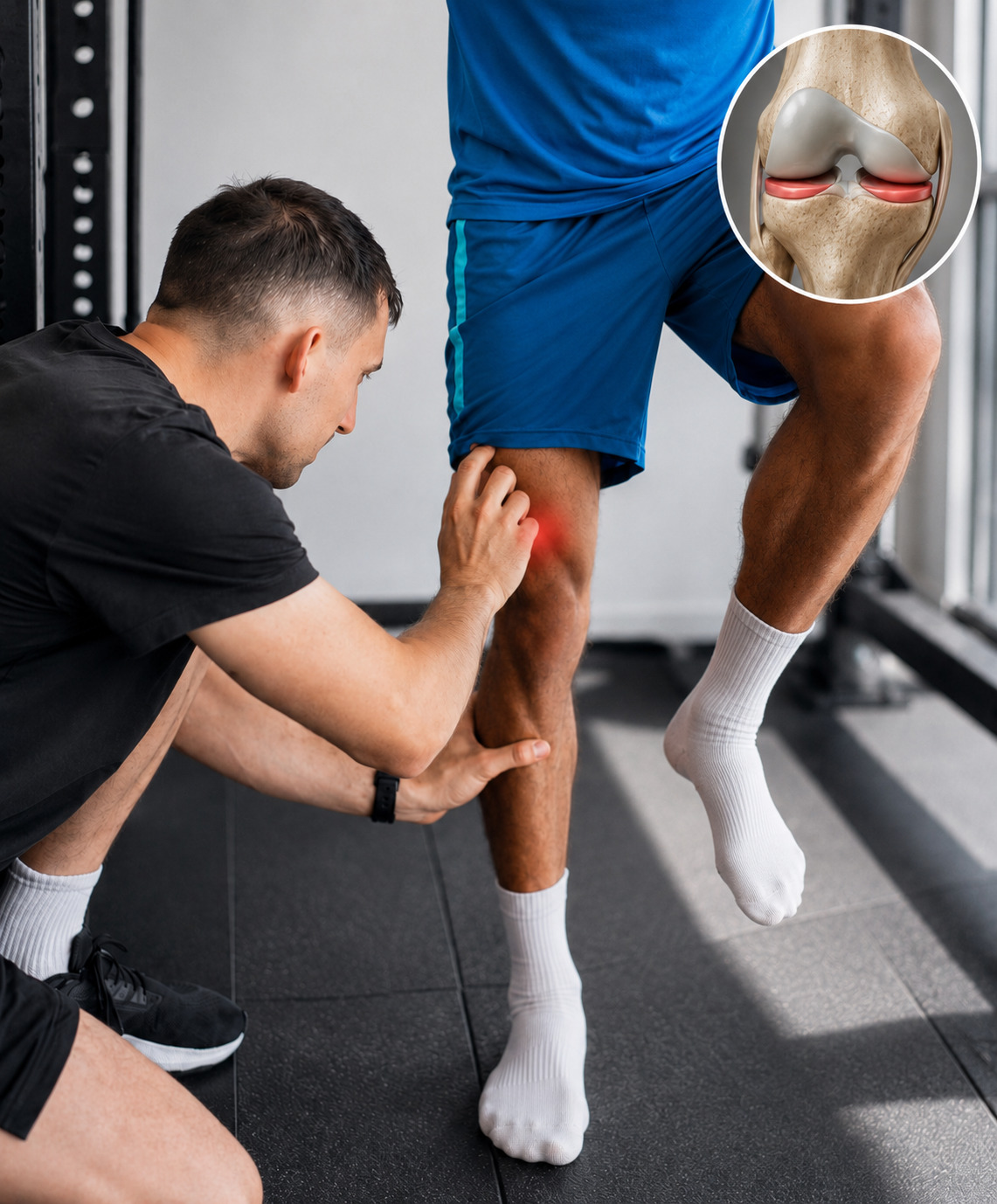
So in physiotherapy in Zurich Altstetten, the shoulder joint is only part of the picture. We also check your shoulder blade, upper back and neck, your strength and mobility, and what your work and sport ask of your shoulder.
Common Causes of Shoulder Pain
The most common causes are irritation of the rotator cuff and the bursa, known as subacromial pain syndrome or impingement. Frozen shoulder, calcific tendinitis and instability are less common, but each needs its own approach.
Shoulder Impingement (Subacromial Pain Syndrome)
The shoulder hurts on the outside and front, especially when you raise your arm out to the side. A painful arc between roughly 60 and 120 degrees is typical, and it often eases again near the top. For a long time, the tendon was thought to be mechanically “pinched” under the roof of the shoulder. Today, overload of the tendons and bursa is seen as the main driver. Guidelines therefore recommend a targeted exercise programme first. Whether surgery is ever worth considering is a decision you make together with your doctor.
Shoulder Bursitis
The bursa under the roof of the shoulder is a small fluid-filled sac that lets the tendons glide. When it is irritated, lying on that side hurts most, and lifting the arm often does too. Bursitis usually goes hand in hand with tendon irritation and is treated in a similar way, adjusting load first and then building strength. If the shoulder is red, hot and swollen and you have a fever, an infection is possible. That needs a doctor the same day.
Rotator Cuff Injury and Rotator Cuff Tear
The rotator cuff tendons can become irritated from overload (tendinopathy) or tear. A tear happens either through an injury, such as a fall onto the arm, or gradually over years. Pain and weakness when lifting or rotating the arm are typical. Many people over 60 have a tear on ultrasound or MRI without ever having had symptoms. For tears that develop gradually, physiotherapy is therefore often the first step. If you have shoulder pain after a fall and suddenly can’t lift your arm, though, see a doctor promptly, because early surgery may need to be considered.
Frozen Shoulder (Adhesive Capsulitis)
In a frozen shoulder, the joint capsule becomes inflamed and then shrinks. The shoulder stiffens in every direction, most noticeably when you turn the arm outwards. Night pain is often severe in the early phase. It mostly affects people between 40 and 65, women more often than men, and diabetes and thyroid disease raise the risk. It often runs its course over one to three years. Physiotherapy follows the phase, with pain relief and gentle movement early on and targeted stretching and strength later.
Calcific Tendinitis
Calcium deposits build up in one of the rotator cuff tendons, often unnoticed for a long time and mostly in middle age. When the body starts to break the calcium down, sudden and very severe pain can follow, often at night and without any obvious trigger. The diagnosis is confirmed with an X-ray or ultrasound. Alongside medical treatment, shockwave therapy for calcific tendinitis is well researched for chronic cases. Physiotherapy then restores movement and strength.
Unstable or Dislocated Shoulder
Once a shoulder has dislocated, it often stays unstable, especially in young, active people. You may feel unsure of it during throwing or overhead movements, sometimes afraid it will “pop out” again. Some shoulders are naturally very loose even without an injury. Either way, stability and strength training are at the heart of treatment. After repeated dislocations, we plan your rehab together with your doctor.
Biceps Tendon and Labrum (SLAP Tear)
The long head of the biceps runs over the front of the shoulder and attaches at the top of the labrum, the rim of cartilage around the socket. An irritated biceps tendon causes pain at the front of the shoulder, often when carrying weight with a straight arm or doing pull-ups. The rotator cuff is often involved at the same time. A tear at the top of the labrum (SLAP tear) is seen mainly in throwing sports or after a fall, and shows up as deep pain and sometimes a clicking or catching feeling.
AC Joint Pain
Pain on top of the shoulder that gets worse when you bring your arm across your body often comes from the acromioclavicular (AC) joint. Typical causes are falls onto the shoulder, off the bike or on the ski slope, or a lot of heavy bench pressing and dips.
Shoulder Arthritis
Osteoarthritis of the shoulder is less common than in the knee or hip and mostly affects older people or shoulders with a previous injury. Pain on load, stiffness and grinding are typical. Adapted training can ease pain and make daily life noticeably easier, even when the X-ray shows marked changes.
Shoulder Pain From the Neck or Internal Organs
Not all shoulder pain comes from the shoulder. An irritated nerve root in the neck can send pain into the shoulder and arm, often with tingling or numbness down into the hand. The shoulder itself then usually moves freely, while head movements change the pain. Internal organs can also refer pain to the shoulder, the heart mainly to the left, the gallbladder to the right, and less often the lungs. That is why we always check your neck too and ask about other symptoms.
Which Cause Fits Your Shoulder Pain?
Where and when it hurts says a lot about the cause. This overview doesn’t replace an assessment, but it helps with a first sense of what may be going on.
Pain when lifting and reaching overhead
- Pain on the outside of the upper arm, painful arc, lying on that side hurts: usually the rotator cuff or bursa (impingement). Adjust load and build strength in a targeted way.
- Pain at the front of the shoulder when carrying things: often the long biceps tendon, frequently together with the rotator cuff.
- Pain on top of the shoulder, bringing the arm across the body hurts: often the AC joint.
Stiff shoulder and pain at night
- Shoulder stiffens in every direction, especially turning outwards: typical of frozen shoulder. Medical care plus physiotherapy matched to the phase.
- Sudden, very severe pain, often at night, without an injury: possibly calcific tendinitis. Assessment with X-ray or ultrasound. In an acute flare, medical pain relief comes first; if symptoms persist, shockwave therapy and physiotherapy can follow.
Weakness and an unstable shoulder
- You can barely lift your arm after a fall: possible rotator cuff tear. See a doctor promptly.
- Shoulder feels unstable or “pops out”: instability, often after a dislocation. Stability and strength training.
- Deep pain and clicking with throwing: possibly the labrum or biceps anchor (SLAP). Medical assessment, then targeted rehab.
Referred pain and signs of another cause
- Pain from the neck down into the hand, tingling or numbness: more likely an irritated nerve root in the neck. Assessment of the neck and nerves.
- Sudden left shoulder pain with chest pressure, shortness of breath or a cold sweat: possible heart attack and an emergency.
- Red, hot, swollen shoulder with a fever: possible joint infection. See a doctor the same day.
Shoulder Pain at Night, When Lifting Your Arm, in Sport and at the Desk
Pain at night and when lifting the arm usually points to an irritated rotator cuff or bursa, while pain running down into the hand points more towards the neck. When it hurts often says more than exactly where, so we go through your day in detail at the first appointment.
Shoulder Pain at Night and When Sleeping on Your Side
Night pain wears you down because it costs you sleep. Shoulder pain when sleeping on your side happens because the tendon and bursa get squeezed on the painful side. On the other side, the arm drops forward and pulls on the tendons. Most people do better on their back with a small pillow under the elbow. If you prefer your side, lie on the good side and rest the painful arm on a pillow in front of your stomach. Very strong night pain that doesn’t ease over several weeks often fits frozen shoulder, calcific tendinitis or a tendon tear, occasionally other causes, and should be checked.
Shoulder Pain When Lifting Your Arm, Dressing or Reaching Behind You
Putting on a jacket, reaching for the top shelf, doing up a bra or getting your wallet out of a back pocket. Everyday movements like these reveal a lot. Pain when lifting your arm out to the side points more towards the rotator cuff. If reaching behind your back and turning the arm outwards are what’s hardest, an early frozen shoulder may be behind it. With tendon problems, strength work starts in comfortable positions and only moves overhead later.
Shoulder Pain From Lifting Weights
Bench press, overhead press, dips and pull-ups all put a lot of load through the shoulder. Pain usually comes from progressing too fast or from programmes with lots of pushing and little pulling. You rarely need to stop completely. With sports physiotherapy and adapted strength training, we change exercise choice, grip and load so you can keep training.
Shoulder Pain in Tennis, Volleyball, Swimming and Climbing
Overhead sport asks the shoulder for high forces at the end of its range. In front crawl, the shoulder goes overhead hundreds of times in a single session. Problems often come from high volume, technique or too little strength in the external rotators. We measure rotator cuff strength objectively with the VALD DynaMo and compare both sides. That becomes the basis for your return to sport and for injury prevention.
Neck and Shoulder Pain From Desk Work
Hunched shoulders, a mouse that is too far away or a desk that is too high load the shoulder and neck on one side. You feel it as a pull between the shoulder and neck or at the front of the shoulder. Keeping the mouse and keyboard close, resting your forearms and taking regular breaks often makes a clear difference. For stubborn muscle tension, dry needling of trigger points can complement treatment.
Right or Left Shoulder Pain
Your dominant side, so usually the right for right-handers, is overloaded more often in sport and at work. Right shoulder pain can occasionally come from the gallbladder, especially after a fatty meal and together with upper abdominal pain. With left shoulder pain, also think of your heart. If it comes on suddenly with chest pressure, shortness of breath, nausea or a cold sweat, call 144 immediately.
Shoulder Pain Radiating Down the Arm
A shoulder problem typically refers pain to the outside of the upper arm and rarely below the elbow. If pain runs down into your hand and fingers, often with tingling, the cause is more likely in the neck. The difference matters, because the treatment is quite different.
When Should You See a Doctor or Physio for Shoulder Pain?
Get shoulder pain assessed if it lasts longer than two to three weeks, disturbs your sleep or stops you lifting your arm properly. Caught early, it is often possible to stop the shoulder stiffening up or the pain becoming chronic.
Other reasons to get it checked:
- the shoulder is getting stiffer
- you notice weakness when lifting or rotating your arm
- the shoulder feels unstable or has dislocated before
- the pain keeps coming back
- sport or work is becoming difficult
Important: Go to an emergency department or see a doctor immediately if, after a fall, your shoulder looks deformed, swells badly or you can no longer lift your arm. The same applies to a red, hot shoulder with a fever, fever or feeling generally unwell after a shoulder injection or with a weakened immune system, constant pain at rest and at night that no position relieves, numbness or weakness in the arm, a new lump or swelling, unexplained weight loss or a history of cancer. Sudden shoulder pain with chest pressure, shortness of breath or a cold sweat is an emergency, so call 144.
Diagnosis: Ultrasound, X-ray or MRI?
For most shoulder pain, a detailed conversation and a thorough examination are enough for a good assessment. Imaging makes sense when a tear after an injury, calcium deposits, arthritis or a bone injury are suspected, or when symptoms don’t improve over several weeks despite treatment. Your doctor decides which scan is appropriate.
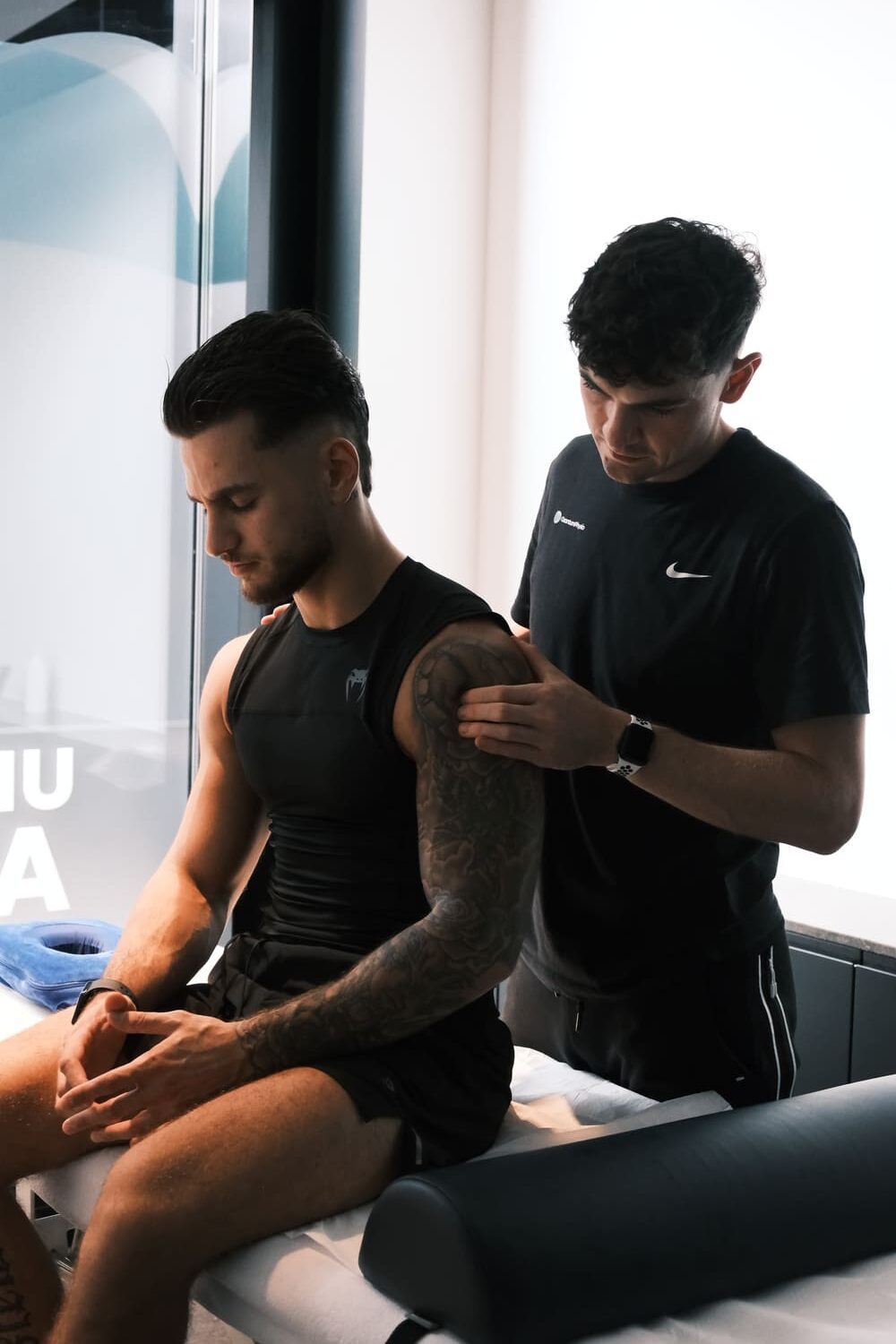
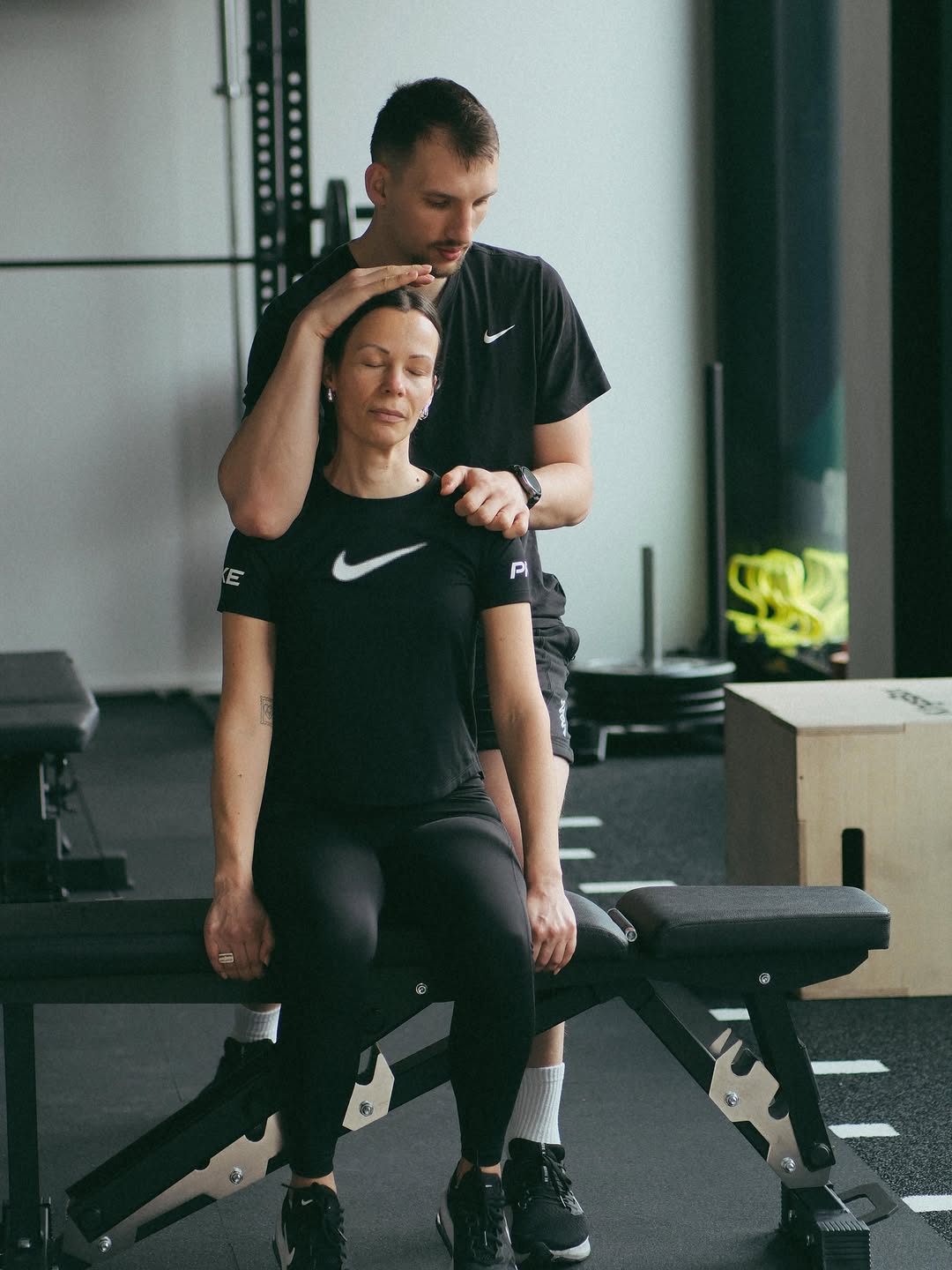
In physiotherapy, we test active and passive movement, strength in different directions, how your shoulder blade moves and your neck. Each type of imaging shows something different:
Ultrasound
Shows tendons, the bursa and calcium deposits, without radiation and even while you move. Well suited when a tendon tear or bursitis is suspected. How useful it is depends a lot on the experience of the person scanning.
X-ray
Shows bone, calcium deposits and arthritis. After a fall, it rules out fractures and dislocations. Tendons and other soft tissue don’t show up on an X-ray.
MRI
Shows tendons, muscles, cartilage and the labrum in detail. Useful when surgery is being considered or the diagnosis remains unclear. With instability, contrast is sometimes injected into the joint first (MR arthrogram).
Examination without a scanner
A painful arc when lifting the arm sideways points to the tendon or bursa. If turning the arm outwards is clearly restricted even when we move it for you, that fits a frozen shoulder, but also arthritis; an X-ray tells them apart. Weakness in particular directions gives clues about which tendon is involved. No single test proves anything; it is the overall picture that counts.
Shoulder Pain Treatment Without Surgery: Injection or Operation?
A cortisone injection can ease severe pain for a while and make it easier to start exercising. It doesn’t build strength. Whether it makes sense is your doctor’s call. Surgery is mainly discussed after a fresh tendon tear with loss of strength in active people, after repeated dislocations, with advanced arthritis and severe symptoms, or when months of consistent training haven’t been enough. After shoulder surgery, we guide your rehab according to your surgeon’s protocol.
Good to know: Rotator cuff tears, a thickened bursa or calcium deposits also show up in many people with no shoulder pain at all, and more often the older they are. A scan finding alone therefore doesn’t explain your symptoms. What matters is whether it fits your examination and how your shoulder actually behaves.
How Physiotherapy Helps With Shoulder Pain
For most shoulder pain, a targeted exercise programme that progresses gradually is the most important part of treatment, often combined with manual therapy. For subacromial pain syndrome, the Dutch guideline (Diercks 2014) recommends exactly that. For frozen shoulder, the US guideline (Kelley 2013) puts education, stretching and mobility exercises and joint mobilisation first. Massage, heat or electrotherapy alone tend to help only for a while. We explain why in Physiotherapy or Massage: Which Is Better for Pain Relief?
Treatment usually includes:
- testing movement, strength and shoulder blade control, including your upper back and neck
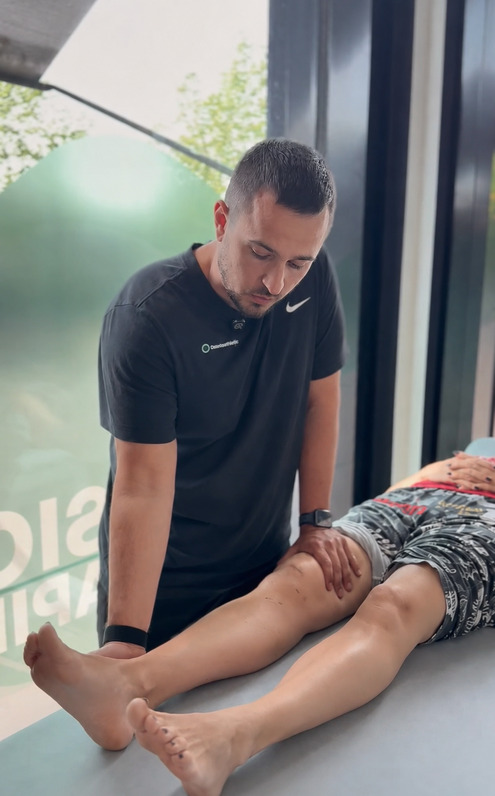
- manual therapy when movement is restricted
- strength training with increasing load for the rotator cuff and shoulder blade muscles
- adjusting training, work and sleeping position
- a gradual return to overhead and throwing movements
How Long Does Treatment Take?
That depends a lot on the cause. Mild tendon irritation often settles within a few weeks. With impingement, an exercise programme is usually planned over around three months, because tendons adapt more slowly than muscles. A frozen shoulder needs support over many months, and rehab after rotator cuff surgery also takes several months.
Shoulder Pain Physiotherapy in Zurich at Quantum Physio
If you are looking for shoulder pain physiotherapy in Zurich, we offer active, clearly planned treatment in Altstetten for both recent and long-standing pain. Your shoulder is assessed by physiotherapists with BSc or MSc degrees, supported by sports therapists, who look at it in the context of your job, daily life and sport.
First, we want to understand why your shoulder is being overloaded. Only then do we plan what it needs, with the aim of making work, training and sleep pain-free again.
English-Speaking Physiotherapy in Zurich
Moved to Zurich and your shoulder flared up after carrying boxes up four flights of stairs or joining a new gym? You are in good company, as many of our patients are expats. Our physiotherapists treat in English and German, and we explain how Swiss insurance handles physiotherapy if the system is new to you.
Without a family doctor yet, you have two routes. Start straight away and pay yourself, or first get a prescription from a GP, a walk-in clinic (called a Permanence in Zurich) or a chiropractor so that basic insurance pays. On a family-doctor or telemedicine model, contact your GP or telemedicine service first. International and expat policies vary, so check whether yours covers physiotherapy and needs a prescription.
Treatment Options
Depending on the cause, we combine:
- manual therapy and joint mobilisation
- medical training therapy (MTT)
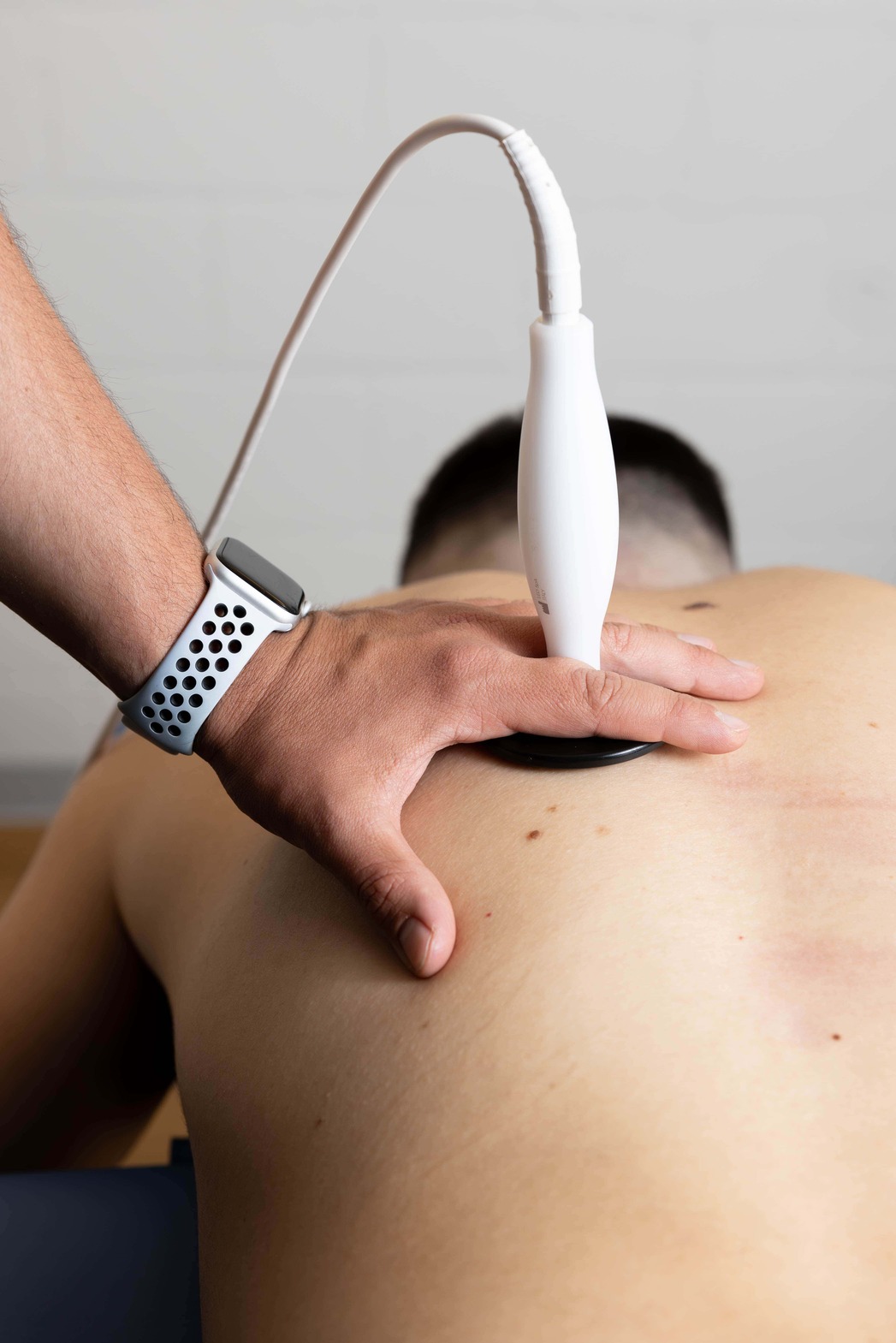
- shockwave therapy for calcific tendinitis and tendon problems
- dry needling for muscle trigger points
- TECAR therapy
- electrotherapy
- blood flow restriction (BFR) training when heavy weights are still too much
- mobility training
- strength testing and return-to-sport tests
- a personal home exercise programme
A frozen shoulder needs a very different plan from a volleyball player with impingement or a climber after a dislocation.
Location and Opening Hours
You will find us at Vulkanstrasse 110a, 8048 Zurich, a few minutes’ walk from Zurich Altstetten station. Trams and buses stop nearby, and visitor parking is a short walk away. From Albisrieden, Höngg, Schlieren or Dietikon it is a quick trip by S-Bahn, tram or bike. We are open Monday to Thursday from 07:00 to 20:00, Friday from 07:00 to 16:30 and Saturday from 08:00 to 14:30. Book your session online.
What Shoulder Physiotherapy Looks Like
Treatment follows four steps, from the first assessment to full load.
1. Assessment
We talk about your symptoms, how they started, any injuries, your work and your sport. Then we test movement, strength and your shoulder blade, check your neck and, if useful, measure rotator cuff strength. We also rule out warning signs.
2. Your Treatment Plan
The assessment becomes a plan with clear goals, such as sleeping through the night again, putting on a jacket without pain or getting back on the tennis court. It combines treatment in the clinic with a short home programme.
3. Building Strength
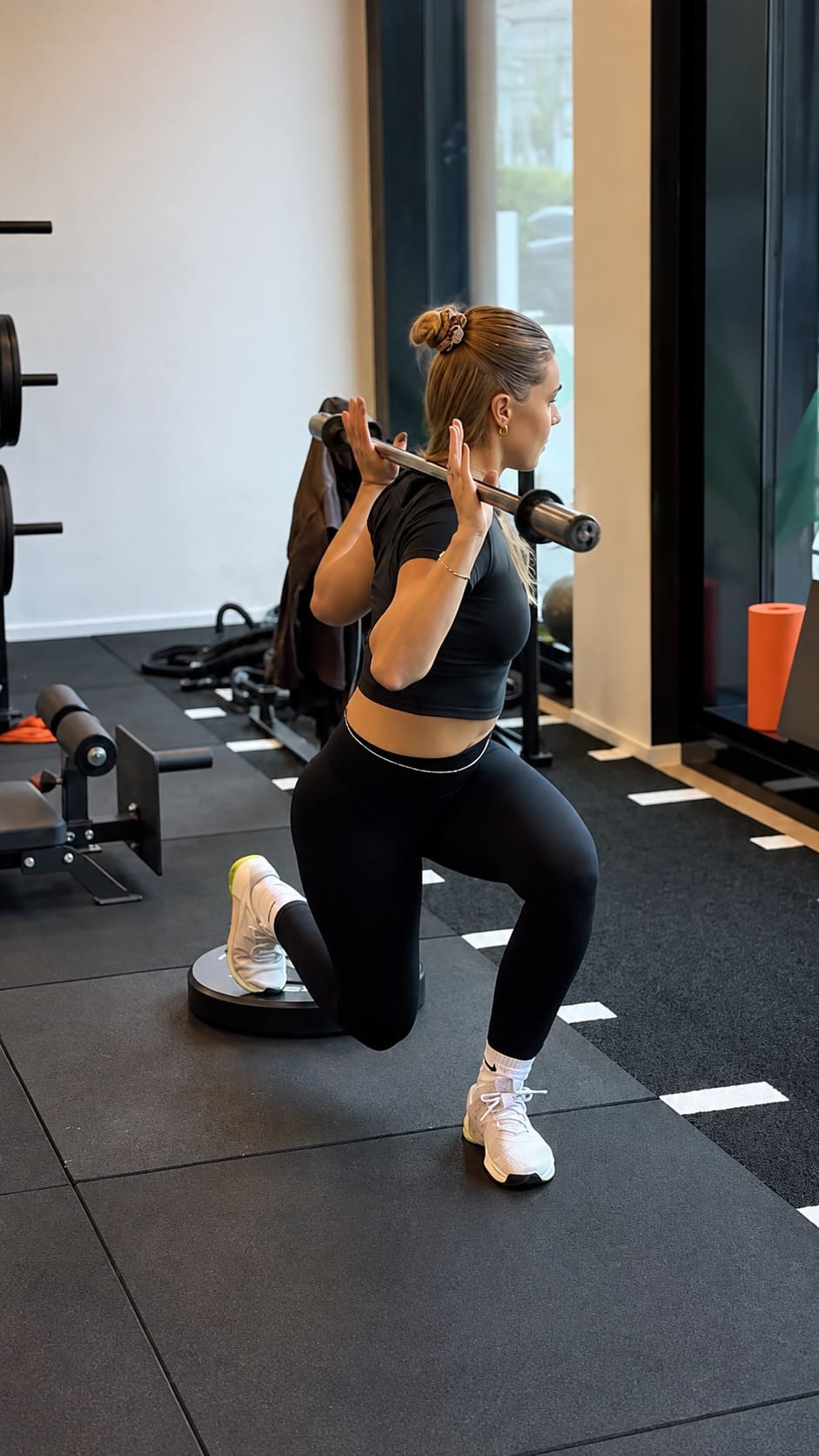
This is where most of the work happens. In medical training therapy (MTT), we train the rotator cuff, shoulder blade muscles and trunk with increasing load, so the tendons become more resilient and the shoulder more stable.
4. Back to Daily Life and Sport
As pain and strength improve, we build up to overhead, throwing or sport-specific movements. A repeat strength test shows whether both sides are similarly strong again.
Shoulder Pain Exercises: 5 Simple Exercises for Home
These exercises suit overuse-related shoulder pain without an injury, such as tendon irritation or impingement. Move slowly. Mild pain up to about 3 out of 10 is fine, as long as it settles quickly afterwards and isn’t worse the next morning. Stop if pain is strong, increasing or spreading down the arm, or if you feel tingling, numbness or dizziness, and get it checked. After an injury, a dislocation or surgery, only start once your doctor has cleared you.
1. Pendulum Swing
Goal: gentle movement and pain relief when symptoms are acute.
How to do it: Support yourself with your good hand on a table and lean forward slightly. Let the painful arm hang loosely. Now gently sway your upper body so the arm draws small circles. The arm itself stays relaxed.
Dosage: 30 to 60 seconds, several times a day.
2. Table Slide
Goal: make it easier to lift your arm forwards.
How to do it: Sit facing a table and rest the forearm of your painful side on a towel. Slowly slide the towel forwards by leaning your upper body with it. Only go as far as feels comfortable, then come back slowly.
Dosage: 10 to 15 repetitions, twice a day.
3. Isometric External Rotation Against a Wall
Goal: activate the rotator cuff without moving the joint. Static holds are often well tolerated by irritated tendons.
How to do it: Stand with your painful side next to a wall. Bend your elbow to 90 degrees, keep it against your side and let the back of your hand touch the wall. Press the back of your hand into the wall with about half your strength, as if turning your forearm outwards. The arm doesn’t move.
Dosage: hold for 20 to 30 seconds, 5 times, once or twice a day.
4. External Rotation With a Resistance Band
Goal: strengthen the rotator cuff.
How to do it: Stand tall and hold a light resistance band in both hands. Keep your elbows at your sides, bent to 90 degrees; a small rolled towel between elbow and body helps. Slowly turn the forearm of your painful side outwards without your elbow leaving your body, then return slowly.
Dosage: 3 sets of 10 to 15 repetitions, every other day. Only increase the resistance once every repetition feels clean.
5. Cross-Body Stretch
Goal: loosen the back of the shoulder.
How to do it: Bring your painful arm across your body at shoulder height. Hold it above the elbow with your other hand and gently pull it closer until you feel a stretch at the back of the shoulder. Keep your shoulder down.
Dosage: hold for 20 to 30 seconds, 2 to 3 times. If it hurts on top of the shoulder (AC joint), skip this one.
In physiotherapy you get a programme that matches your cause and is progressed over time, for example with strengthening in medical training therapy in Zurich.
Four Myths About Shoulder Pain
The most common myths lead either to too much rest or to rushed decisions about surgery.
“I need to rest my shoulder.”
A short break from painful activities makes sense when pain is acute. Weeks of rest, though, leave the shoulder stiff and weak. Movement in a comfortable range and training that builds up gradually work better.
“The MRI shows a tear, so I need an operation.”
Not necessarily. Many tears, especially gradual ones in people over 60, are treated without surgery first, often with good results. Whether an operation makes sense depends on your age, how the tear happened, how much strength you have lost and your goals.
“With impingement, I should never lift my arm overhead again.”
Early on, we often reduce painful overhead load. The goal, though, is a shoulder that can work overhead again, and that is exactly what the training prepares it for.
“A frozen shoulder goes away on its own.”
Many frozen shoulders do improve with time. That can take years, however, and some stiffness sometimes remains. Physiotherapy helps you manage pain and daily life in every phase and regain movement.
Shoulder Pain Relief at Home: What You Can Do Yourself
With mild shoulder pain, it helps to adjust your load rather than keep the arm still. A few simple steps:
- cut back on painful overhead movements and heavy lifting for a while
- move the arm within a pain-free range several times a day
- choose lighter weights or different exercises at the gym instead of stopping completely
- rest the painful arm on a pillow at night
- cold for fresh, intense pain, and heat for tension around the neck and shoulder
- keep your mouse and keyboard close to your body at work
If the pain hasn’t improved after two to three weeks or keeps coming back, self-help is usually not enough. That is the point to get it assessed.
Common Mistakes That Make Shoulder Pain Last Longer
Two extremes do the most harm. Either the arm is protected out of fear for weeks, or training carries on unchanged despite increasing pain. Other common mistakes:
- relying only on painkillers, injections or massage
- going straight back to your old weights after a break
- training programmes with lots of pushing and little pulling
- not getting weakness after a fall checked
What Physiotherapy Costs in Zurich and What Insurance Pays
With a doctor’s prescription, Swiss basic health insurance covers most of the cost, minus your deductible and co-payment. Our article Physiotherapy in Zurich Altstetten: Treatment and Costs explains more.
With a Medical Prescription
If you hurt your shoulder in a fall, say off your bike or on the ski slope, and you are employed, your employer’s accident insurance (UVG, often Suva) usually pays, with no deductible or co-payment. If you are not employed, for example as a student or retiree, accidents are covered by your health insurance and the usual cost sharing applies.
For overload problems such as impingement or frozen shoulder, Swiss basic health insurance (KVG/LAMal) pays as long as a doctor has prescribed the physiotherapy. You pay your annual deductible, known as the franchise (CHF 300 to CHF 2,500 for adults, depending on what you chose), plus a 10% co-payment capped at CHF 700 a year.
Each prescription covers up to nine sessions, and the first has to take place within five weeks of the prescription date. A frozen shoulder in particular often needs several prescriptions; after 36 sessions, your insurer’s medical adviser decides whether treatment continues. Chiropractors can prescribe physiotherapy too.
Without a Medical Prescription
Want to start without going via a doctor first? That is possible. Basic insurance won’t pay, so you cover the cost yourself, or your supplementary insurance may contribute depending on your policy.
It can be worth it if you want your shoulder tested and built up before the tennis or climbing season.
Training, Rehabilitation and Prevention
Medical training therapy, personal training or sport-specific programmes may be billed separately depending on the situation. They are a good fit if you want to keep getting stronger after therapy or prevent relapses.
Frequently Asked Questions About Shoulder Pain
What helps shoulder pain quickly?
Cut back on painful movements for a short while, keep moving the arm within a pain-free range, use cold for fresh pain and rest the arm on a pillow at night. Keeping the arm completely still is usually not a good idea. If nothing improves within two to three weeks, get it assessed.
What is shoulder impingement?
Shoulder impingement, now usually called subacromial pain syndrome, describes pain on the outside of the shoulder when lifting the arm. In most cases the rotator cuff tendons and the bursa are overloaded. The most important treatment is targeted strength training that progresses gradually.
How long does shoulder pain last?
Mild tendon irritation often settles within a few weeks. With impingement, an exercise programme is usually planned over around three months. A frozen shoulder often runs over one to three years, and physiotherapy eases symptoms in every phase.
How long does a frozen shoulder last?
Often one to three years, in phases: painful stiffening, a stiff phase and slow thawing. Physiotherapy matched to each phase helps with pain, sleep and getting movement back.
Is heat or cold better for shoulder pain?
With fresh, intense pain, for example a calcific tendinitis flare, many people find cooling more soothing. With muscle tension, heat usually feels better. Use whatever helps you keep moving.
When should I see a physiotherapist for shoulder pain?
If the pain lasts longer than two to three weeks, wakes you at night, limits lifting your arm, the shoulder is getting stiffer or you are losing strength.
Why does my shoulder hurt at night?
Lying down squeezes or stretches irritated tendons and the bursa, and there is nothing to distract you at night. Very strong night pain often fits frozen shoulder, calcific tendinitis or a tendon tear and should be checked.
Can left shoulder pain be a heart attack?
Yes. A heart attack can cause pain in the left shoulder and arm. If it comes on suddenly with chest pressure, shortness of breath, nausea or a cold sweat, call 144 immediately.
What helps with calcific tendinitis?
During an acute flare, pain relief and medical treatment come first. If symptoms persist, shockwave therapy is well researched for chronic calcific tendinitis of the shoulder. Physiotherapy then restores movement and strength.
Which exercises help with shoulder pain?
Good starting points are pendulum swings, table slides, isometric and band external rotation, and a cross-body stretch. Which ones suit you and how quickly they progress depends on the cause.
Does a rotator cuff tear need surgery?
Not always. Tears that develop gradually are often treated with physiotherapy first, frequently with good results. After an injury with clear loss of strength, especially in younger active people, see a doctor promptly to check whether surgery makes sense.
Do I need an MRI for shoulder pain?
Usually not straight away. A conversation and examination are often enough for a good assessment. An MRI makes sense if surgery is being considered, after an injury with loss of strength, or if symptoms don’t improve over several weeks despite treatment. X-rays show calcium and arthritis, ultrasound shows tendons well.
When is shoulder pain serious?
See a doctor promptly after a fall with a deformed shoulder or if you can’t lift your arm, with a red, hot shoulder and fever, numbness or weakness in the arm, or new pain after cancer. Sudden pain with chest pressure or shortness of breath is an emergency.
Does Swiss health insurance cover physiotherapy for shoulder pain?
Yes, if a doctor or chiropractor prescribes it. Basic insurance pays for up to nine sessions per prescription; you pay your deductible and the 10% co-payment (capped at CHF 700 a year). After an accident, employees are usually covered by accident insurance with no cost sharing.
Do I need a referral to see a physiotherapist in Switzerland?
Not to book an appointment, but basic health insurance only pays with a prescription from a doctor or chiropractor. Without one, you pay yourself, and some supplementary or international policies reimburse it. If your policy uses a family-doctor or telemedicine model, contact that service before anyone else.
Where can I find an English-speaking physiotherapist for shoulder pain in Zurich?
Quantum Physio at Vulkanstrasse 110a in Zurich Altstetten is a few minutes’ walk from Zurich Altstetten station. Our physiotherapists treat shoulder pain in English and German, combining physiotherapy and sports physiotherapy with manual therapy, shockwave therapy, medical training therapy and objective rotator cuff strength testing. You can book early mornings, evenings and Saturdays.