Yes, Swiss health insurance covers physiotherapy, as long as a doctor has prescribed it. Basic insurance then pays for the treatment, and you pay your deductible and a 10% co-payment, just as you would for any other treatment. Without a prescription, basic insurance pays nothing, although a supplementary policy may cover part of it. After an accident, employees are usually covered by their employer’s accident insurance instead.
The details are where it gets harder: how many sessions are covered, who pays after a fall from your bike, and how do you get a prescription if you have only just moved to Zurich? The sections below answer each one, with worked examples.
In short: With a doctor’s prescription, Swiss basic health insurance covers up to nine physiotherapy sessions per prescription, minus your deductible and a 10% co-payment (capped at CHF 700 a year). For the first prescription, the first session must take place within five weeks; after 36 sessions, your insurer’s medical adviser decides whether treatment continues. After an accident, employees are usually covered by accident insurance with no cost sharing. Without a prescription, you pay yourself or through supplementary insurance.
When Does Swiss Health Insurance Pay for Physiotherapy?
Basic insurance pays for physiotherapy when it is prescribed by a doctor, medically necessary and carried out by a physiotherapist approved to bill basic insurance. Physiotherapy is a compulsory benefit of Swiss basic health insurance (KVG/LAMal). It is covered under every insurance model and every deductible, but on a GP, HMO or Telmed model the prescription must come through your agreed route.
Three conditions need to be met:
- You have a doctor’s prescription before treatment starts.
- There is a medical reason, such as back pain, an injury or surgery.
- The physiotherapist or practice is approved to bill basic insurance.
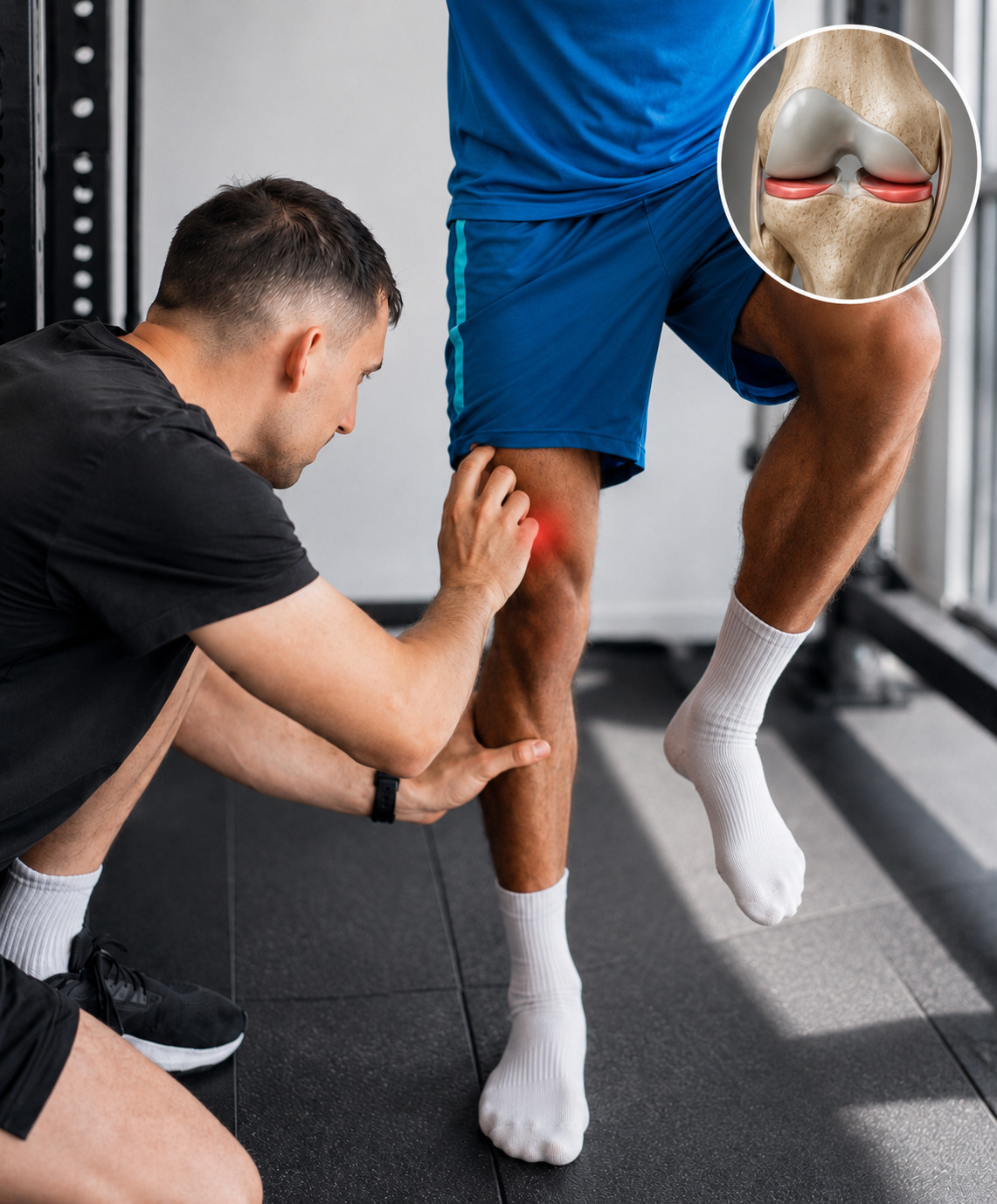
Typical reasons for a prescription include neck pain, shoulder problems, knee pain after sport, back pain or rehab after a cruciate ligament tear. Both exercise therapy and manual therapy can be prescribed. Prevention and general fitness training are not covered by basic insurance.
Prescription, 9 Sessions, 36 Sessions: How Basic Insurance Works
The rules are set out in the Health Care Benefits Ordinance (KLV, Art. 5). They are the same for every insurer, whether you are with CSS, Helsana, Swica or a smaller company.
Who Can Prescribe Physiotherapy?
Doctors of any specialty can prescribe physiotherapy, so your GP, an orthopaedic specialist or an emergency doctor. Chiropractors can prescribe it too, and so can dentists, for example for jaw physiotherapy for TMJ problems.
Nine Sessions per Prescription
One prescription covers up to nine sessions. For the first prescription, the first session must take place within five weeks of the prescription date, otherwise it lapses. That deadline does not apply to follow-up prescriptions.
After Nine Sessions: a Follow-Up Prescription
If nine sessions are not enough, your doctor issues another prescription. That is common with a frozen shoulder or after knee surgery. Up to four prescriptions, so 36 sessions, are possible without any further review. Sessions are counted per course of treatment, not per calendar year.
After 36 Sessions: Your Insurer’s Medical Adviser Decides
To continue beyond 36 sessions, your doctor sends a request for cost approval to your insurer, with a report for its medical adviser. The adviser then assesses whether, and for how long, treatment continues. From the 37th session, that approval is required explicitly, so plan ahead to avoid a gap in treatment.
Medical Training Therapy and Lymphatic Drainage
Medical training therapy (MTT) can also be covered by basic insurance if it is prescribed. It must follow individual physiotherapy and is completed within three months of the introduction to the equipment. Lymphatic drainage can likewise be prescribed, for example for lymphoedema or swelling after surgery.
Health Insurance, Accident Insurance or Supplementary Cover: Who Pays What?
Which insurance pays depends mainly on whether you have an illness or an accident, and whether you have a prescription.
Basic health insurance (KVG/LAMal)
- When: for illness, with a doctor’s prescription.
- What you pay: deductible plus 10% co-payment, capped at CHF 700 a year.
- Scope: up to nine sessions per prescription; beyond 36 sessions only with your insurer’s approval.
Accident insurance (UVG)
- When: after an accident if you are employed. From eight hours a week with the same employer, this also covers accidents in your free time.
- What you pay: no deductible and no co-payment.
- What you need: report the accident to your employer and get a prescription for physiotherapy. With a serious injury, call 144 first; the insurance question comes later.
Accidents covered by health insurance
- When: for leisure accidents if you are not employed, for example as a student, self-employed person or retiree, or if you work less than eight hours a week for the same employer. Your commute then counts as an occupational accident and stays covered by your employer.
- What you pay: deductible and co-payment, as for an illness.
- Exception: if you receive unemployment benefit, you are automatically insured against accidents with Suva.
Supplementary insurance (VVG)
- When: depending on your policy, also without a prescription, for prevention, or for services basic insurance doesn’t cover.
- What you pay: whatever your policy doesn’t cover. Percentages and annual caps are common.
- Tip: check with your insurer before your first appointment.
Your Deductible and Co-Payment for Physiotherapy
For physiotherapy, you first pay your deductible (franchise) and then a 10% co-payment, up to a maximum of CHF 700 a year. Physiotherapy is not counted separately. Doctor’s visits, medication and physiotherapy all count towards the same deductible.
Adults choose a deductible between CHF 300 and CHF 2,500 per calendar year. A high deductible saves on premiums, but often means you pay a course of physiotherapy entirely yourself. Children have no deductible by default (an optional one of up to CHF 600 is possible), and their co-payment is capped at CHF 350 a year.
What counts is the date of treatment. Sessions in December count towards the current year and sessions from 1 January towards the new one, when your deductible starts again from zero.
GP, HMO and Telmed Models: What Applies to Physiotherapy?
Alternative insurance models come with lower premiums. In return, you agree to contact a particular point of care first. For physiotherapy, that means:
- Standard model: you see any doctor you like, who writes the prescription.
- GP model (Hausarztmodell): the prescription comes from your GP, or from a specialist your GP referred you to.
- HMO model: your HMO health centre is the first point of contact.
- Telmed model: you call the telemedicine service first, and it refers you on.
You don’t need to register the physiotherapy separately. What matters is that the prescription comes about the way your model requires.
Important: Get your prescription before the first session, as basic insurance does not pay without one. If you skip the agreed route in a GP, HMO or Telmed model, your insurer can refuse to pay, and that includes going straight to a chiropractor. If you are unsure, check briefly with your insurer or your GP practice before your first appointment.
Worked Examples: How Much Will You Pay?
What physiotherapy costs you in the end depends almost entirely on your deductible and on whether you have already reached it this year. These examples assume treatment costs of CHF 1,000. That is a round number for the calculation, not any particular practice’s rate.
Deductible CHF 300, not yet reached
Of the CHF 1,000, you first pay your CHF 300 deductible. Of the remaining CHF 700, you pay a 10% co-payment, so CHF 70. You pay CHF 370; your insurer pays CHF 630.
Deductible CHF 2,500, not yet reached
The CHF 1,000 is below your deductible. You pay the full CHF 1,000 yourself. It still counts towards your deductible, so if more costs come up in the same year, your insurer contributes once you reach CHF 2,500.
Deductible already reached this year
You only pay the 10% co-payment. On CHF 1,000, that is CHF 100. If you have also reached the CHF 700 co-payment cap, physiotherapy costs you nothing for the rest of the year.
Accident covered by your employer
Accident insurance pays for prescribed physiotherapy with no deductible or co-payment. You pay CHF 0.
The same calculation applies to doctor’s visits and medication. If you had surgery in the spring, you may well have reached your deductible and co-payment cap already, and physiotherapy in the autumn then costs you little or nothing.
Good to know: If you have already used up your 2026 deductible, sessions up to 31 December cost you only the 10% co-payment, or nothing if you have also reached the CHF 700 cap. From 1 January 2027, everything starts again. If treatment is due anyway, it can be worth discussing a December start with your doctor.
Physiotherapy Without a Prescription: What Does It Cost?
Without a prescription, you pay for physiotherapy yourself, unless your supplementary insurance covers part of it. There is no direct access to physiotherapy under Swiss basic insurance yet. It is being debated, but it is not in force.
Going without a prescription can still make sense if you want to start quickly, for prevention, or to have your body checked by a sports physiotherapist before a ski or tennis season. The cost then depends on the practice’s own rates. We will tell you what a session costs when you book an appointment.
What Supplementary Insurance Pays
Some outpatient supplementary policies contribute to physiotherapy without a prescription, to prevention courses or to gym memberships. The differences are large. Ask your insurer before your first appointment:
- Does the policy cover physiotherapy without a doctor’s prescription?
- What percentage is covered, and is there an annual limit?
- Does the therapist need to be on a particular list?
- Is medical training therapy after physiotherapy included?
Physiotherapy With a Prescription at Quantum Physio in Zurich
At Quantum Physio in Zurich Altstetten, we treat patients with a doctor’s prescription through basic insurance, after accidents through accident insurance, and without a prescription as self-payers. Our team of BSc- and MSc-qualified physiotherapists and sports therapists looks after you from the first session to the last.
Bring your prescription and your insurance card to the first appointment, and after an accident the claim number from the accident insurer. We explain at the first appointment how billing with your insurer works. More in our article on how treatment and costs work at Quantum Physio.
New to Switzerland?
Moved to Zurich recently? You must take out Swiss basic health insurance within three months of taking up residence. If you do so in time, you are covered retroactively from the date you moved here; if you are late, cover only starts when you join, plus a premium surcharge. International or expat policies replace basic insurance only in exceptional cases approved by the authorities.
Without a family doctor yet, you can get a prescription from a GP, a walk-in clinic (called a Permanence in Zurich) or a chiropractor. On a GP, HMO or Telmed model, contact that first point of care before anyone else. Our website is available in English.
Appointments Within the Deadline
The practice is on Vulkanstrasse 110a, close to Zurich Altstetten station. Because we treat from 07:00 until 20:00 on weekdays and on Saturday mornings, it is usually easy to fit your first session into the five weeks after the prescription date.
Four Steps to Physiotherapy Paid by Your Insurer
1. Get a Prescription
Your doctor or chiropractor writes the prescription. On a GP, HMO or Telmed model, go through your agreed first point of care.
2. Start Within Five Weeks
Book your first appointment so that it falls within five weeks of the prescription date. Bring the prescription and your insurance card.
3. Treatment and Billing
The practice bills according to the national physiotherapy tariff, either directly to your insurer or through an invoice to you. Your insurer then charges you the deductible and co-payment.
4. Extend if Needed
If you need more than nine sessions, ask your doctor for a follow-up prescription. After 36 sessions, your insurer’s medical adviser decides.
The Invoice: Tiers Garant or Tiers Payant
Switzerland has two ways of billing treatment. By law, the default is tiers garant: you receive the invoice, pay it and send it to your insurer, which reimburses you minus your deductible and co-payment. If the insurer and the practice have agreed on tiers payant, the practice sends the invoice straight to your insurer. The insurer pays and later charges you your share, and you receive a copy of the invoice so you can see what was billed.
Billing currently uses flat rates per session, valued in tariff points. A new tariff structure for physiotherapy has been submitted to the Federal Council. It is planned for 1 January 2027, but approval is still pending (as of November 2026). Either way, check each invoice briefly: are the dates and the number of sessions right?
Four Common Misconceptions About Physio and Insurance
“With a high deductible, insurance won’t pay for physio.”
It does. Physiotherapy is still covered; you just pay up to the amount of your deductible yourself. If other treatment comes along in the same year, you may reach your deductible sooner than you think.
“I can go straight to a physio and insurance will pay.”
Not under basic insurance. Without a prescription you pay yourself, although supplementary insurance may cover part of it.
“After nine sessions, that’s it.”
No. Nine sessions is the limit per prescription. A follow-up prescription continues treatment, and only after 36 sessions is approval from the insurer’s medical adviser needed.
“After a sports injury, health insurance always pays.”
If you are employed and work at least eight hours a week for the same employer, you are also covered for accidents in your free time through your employer’s accident insurance. It pays with no deductible and no co-payment, including for sports physiotherapy after an injury.
Before the End of the Year: Deductible, Switching Insurer and Model
November and December are when many people make decisions for the year ahead. Three dates matter for physiotherapy:
- 30 November 2026: your cancellation of basic insurance must reach your insurer by this date if you want to switch on 1 January 2027. The postmark does not count, and the Federal Office of Public Health (FOPH) recommends sending it by registered post by 15 November.
- Deductible and model: a lower deductible and leaving a GP, HMO or Telmed model must also be requested by 30 November, a higher deductible by 31 December. You can join such a model at any time.
- 31 December: the last day on which treatment still counts towards your 2026 deductible and co-payment.
If you expect a longer course of physiotherapy in 2027, for example after planned knee or shoulder surgery, choose your deductible carefully. A high deductible saves on premiums but rarely pays off when you know high medical costs are coming. Compare premiums and models independently, for instance on the federal government’s official premium calculator (priminfo.admin.ch).
Children, Pregnancy and Expat Policies
Children and teenagers
Children up to 18 have no deductible by default; an optional deductible of up to CHF 600 is possible. Their co-payment is capped at CHF 350 a year. The prescription rules are the same as for adults, and the prescription often comes from the paediatrician.
Pregnancy and after birth
From the 13th week of pregnancy until eight weeks after the birth, basic insurance charges no deductible and no co-payment for medically prescribed services. That includes, for example, prescribed physiotherapy for back pain during pregnancy.
International and expat policies
If you have an international health policy in addition to Swiss basic insurance, check whether it covers physiotherapy, whether it needs a prescription and whether you pay first and claim back. Policies vary widely.
Frequently Asked Questions About Physiotherapy and Swiss Health Insurance
Does Swiss health insurance cover physiotherapy?
Yes, if a doctor, chiropractor or dentist has prescribed it. Basic insurance then pays, and you pay your deductible and a 10% co-payment (capped at CHF 700 a year).
How many physiotherapy sessions does Swiss health insurance cover?
Up to nine sessions per prescription. With follow-up prescriptions, up to 36 sessions are possible without further review. After that, your insurer’s medical adviser decides whether treatment continues.
How long is a physiotherapy prescription valid?
For the first prescription, the first session must take place within five weeks of the prescription date. Otherwise it lapses and you need a new one. The deadline does not apply to follow-up prescriptions.
Can I see a physiotherapist without a referral in Switzerland?
Yes, but basic insurance will not pay. You pay yourself, or your supplementary insurance covers part of it, depending on your policy. There is currently no direct access to physiotherapy under Swiss basic insurance.
Does supplementary insurance cover physio without a prescription?
Some outpatient supplementary policies do, usually with a percentage and an annual cap. Others still require a prescription or a therapist from their list. Ask your insurer before your first appointment.
Do I pay the deductible and co-payment for physiotherapy?
Yes, as for any benefit under basic insurance. First you pay your deductible, then a 10% co-payment up to CHF 700 a year. After an accident covered by your employer’s accident insurance, neither applies.
Who pays for physiotherapy after an accident?
Employees working at least eight hours a week for the same employer are covered by the employer’s accident insurance, often Suva, with no deductible or co-payment. If you are not employed, your health insurer covers accidents and the deductible and co-payment apply. People receiving unemployment benefit are insured with Suva.
Who can prescribe physiotherapy in Switzerland?
Doctors of any specialty, chiropractors and dentists. On a GP, HMO or Telmed model, go through your agreed first point of care.
What happens after 36 physiotherapy sessions?
Your doctor sends a request for cost approval with a report to your insurer’s medical adviser, who decides whether, and for how long, the insurer keeps paying.
Does health insurance cover medical training therapy (MTT)?
Yes, if it is prescribed. It must follow individual physiotherapy and lasts at most three months from the introduction to the equipment. General fitness training is not covered by basic insurance, though some supplementary policies contribute.
Does my expat or international health insurance cover physio in Zurich?
It depends on your policy. Most people living in Switzerland must have Swiss basic insurance within three months of taking up residence; an international policy replaces it only in exceptional cases. Check whether your international policy covers physiotherapy and whether it requires a prescription.
Is it worth having physiotherapy before the end of the year?
If treatment is medically needed anyway and you have already reached your deductible this year, yes: sessions up to 31 December then cost you only the 10% co-payment, or nothing. From 1 January, your deductible starts again from zero.
Does health insurance cover physiotherapy for children?
Yes, with a prescription the same rules apply as for adults. Children have no deductible by default, and their co-payment is capped at CHF 350 a year.
Where can I get physiotherapy with a prescription in Zurich?
Quantum Physio at Vulkanstrasse 110a, a few minutes’ walk from Zurich Altstetten station, treats patients with a prescription through basic insurance, after accidents through accident insurance, and without a prescription as self-payers. Appointments are available early mornings, evenings and on Saturdays.